
Uncategorized
OPINION:NIGERIA’S POWER PARALYSIS: A CONSUMER’S EXPERIENCE AND VIEWPOINT.


By: A G Abubakar
It is 6:30 p.m. across Nigeria. Workers are returning from the day’s grind, children drift in from improvised street football pitches, and families begin to settle into the rhythms of the evening. In kitchens, dinner plans take shape; in living rooms, bodies seek rest. Then darkness falls—not the natural, tranquil descent of night, but an all-too-familiar, suffocating blackout.
In its place comes a ritual of improvisation: rechargeable torches flicker to life, mobile phone flashlights strain to illuminate rooms, small solar units are rationed, and, in extreme cases, matches are struck like relics of a forgotten age. For millions of Nigerians, this is not an occasional inconvenience—it is a daily reality. The frustration is not merely palpable; it is systemic. Life and livelihoods have seemingly been taken to medieval times.
Nowhere is the cost of Nigeria’s power crisis more evident than in its informal and small-scale business sector, which accounts for over 80% of employment, according to the NBS.
Welders, metal fabricators, and aluminium workers—whose trades depend almost entirely on electricity—often spend entire days idle, waiting for power that never comes. Hairdressers, barbers, and restaurant operators are similarly paralysed. Perishable goods spoil. Cold drinks turn warm. Customers drift away.
The alternative—petrol or diesel generators—offers little relief. Known colloquially as “I pass my neighbour,” these machines have become both a lifeline and a liability. With petrol prices hovering between ₦900 and ₦1,300 per litre following subsidy removal in 2023, and diesel prices often nearing ₦2,000 per litre, the cost of self-generation has become prohibitive.
According to the MAN, manufacturers spent over ₦1.1 trillion on alternative energy sources in 2023 alone. Many multidimensional firms like Dunlop, Michelin, PZ, P&G, Bayer, Unilever, etc have relocated to places like Ghana, and others, where power and other operational requirements are available and reliable. For small businesses, the burden is even more crushing, pushing many to closure and deepening poverty levels in a country where, as the World Bank (2024) estimates, over 60% of the population lives below the poverty line.
Even spiritual spaces are not immune. In mosques, during the call to prayer (adhan), power outages often silence loudspeakers mid-recitation, leaving worshippers disoriented. Churches face similar disruptions, with services punctuated by abrupt darkness or the intrusive roar of generators.
These backup systems, while necessary, come at a cost—financial and experiential. Maintenance expenses drain already limited resources, while noise pollution competes with sermons and hymns. What should be moments of solemn reflection and spiritual connection often become exercises in endurance.
If the inconvenience in homes and businesses is troubling, its implications in healthcare are alarming. Across Nigeria, hospitals and clinics routinely grapple with unreliable power supply. Patient wards plunge into darkness. Critical diagnostic equipment fails. Surgical procedures are delayed or, in extreme cases, cancelled. It is a sad commentary to see critically ill patients battling suffocating heat and mosquitoes in dark hospital wards in most Nigerian healthcare centres.
The Nigerian Medical Association (NMA) has repeatedly warned that erratic electricity contributes to avoidable deaths, particularly in neonatal care, emergency surgery, and vaccine storage. While some tertiary hospitals rely on generators or solar backups, the cost is immense and unsustainable for many primary healthcare centres, especially in rural areas.
It is also a common practice for DisCos to ask neighbourhoods to shoulder the procurement of installations like transformers, cables, cutouts, etc., because the DisCos do not have the financial capacity to do so. It is a case of a retail shop asking customers to come with their weighing machines, measures, and shopping bags—a truly disgusting and unintelligent business practice. But that is what Nigeria’s power consumers have been subjected to for decades.
Authorities are rarely bothered because alternatives are not easy to come by, thus holding consumers to ransom. In the end, they are still left facing one of three variants of electricity outage challenges. These include transient faults occasioned by short circuits, flashovers, failure of grid protection devices (GPD); brownouts (drops in voltage) caused by equipment or operational challenges; and blackouts, which may have to do with the network itself. These frustrating issues have, in a way, become “Nigerians” to the dismay of those who could recall that in 1972, the PRO of the defunct ECN, Alex Nwokedi had to issue public notice to the public a planned maintenance work on Akure, Midwest and Enugu would be disrupted for some hours on Sunday, 12th March 1972. Such is now history.
Nigeria’s electricity crisis is as much historical as it is structural. Electric power development began under colonial rule with the establishment of the Nigerian Electricity Supply Company (NESCO) in 1929. Post-independence, the sector evolved into the Electricity Corporation of Nigeria (ECN) and later the National Electric Power Authority (NEPA) in 1972—a name that became synonymous with inefficiency. In 2005, under the Electric Power Sector Reform (EPSR) Act, NEPA was unbundled into the Power Holding Company of Nigeria (PHCN), which was subsequently privatised in 2013 into 18 successor companies: 11 Distribution Companies (DisCos), 6 Generation Companies (GenCos), and the Transmission Company of Nigeria (TCN), which remains government-owned.
Regulatory oversight was assigned to the Nigerian Electricity Regulatory Commission (NERC), while policy direction resides with the Federal Ministry of Power. For less than 5,000 megawatts being transmitted daily, Nigeria has a cacophony of bodies. At last count, there are over half a dozen: NERC, Nigeria Bulk Electricity Trading (NBET), TCN, GenCos, DisCos, Niger Delta Power Holding Company (NDPHC), Nigeria Independent System Operator (NISO), Grid Asset Management Company (GAMCO), etc. The last two are the newest entrants.
Nigeria, with a population exceeding 220 million, struggles to generate between 3,500 and 5,000 megawatts of electricity—far below its estimated demand of over 20,000 MW, according to the International Energy Agency (IEA). By comparison, South Africa, with a population of about 60 million, has an installed capacity of over 50,000 MW, and Egypt, with 110 million people, has about 59,000 MW. Both countries still scaling up.
Per capita electricity consumption in Nigeria hovers around 144 kWh annually—one of the lowest globally and also lower than the African average of 617 kWh. The WB notes that over 88 million Nigerians lack access to grid electricity, making the country home to the largest electricity access deficit in the world.
Metering remains another critical challenge. As of 2024, NERC reports that only about 50–55% of electricity customers are metered. Thus out of the DisCos records of 13 million customers, only about 6.5 million are metered leaving millions on estimated billing, and millions more in the hard-to-trace power-black-market— rendering the system highly inefficient, extortive, and corruption prone, with both consumers and officials complicit. Kano, Kaduna, and Yola DisCos have as low as 25% metering. In contrast, lesser-endowed nations like Ghana and South Africa have 85% (up to 90%) and 95% metering, respectively.
The problem is compounded by poor synchronisation along the power value chain (generation, transmission, distribution, regulation, maintenance etc), and unrealistic operational assumptions have made the system inefficient and highly unstable; a painful experience for both service providers and consumers. Some of the assumptions include a fairly stable exchange rate, seamless gas supply, minimum redundancy, and an Aggregate Technical, Commercial, and Collection (ATC & C) losses of 21 percent. It’s currently over 50%. The tariff model that has built around these variables, including the cost of generation among others, hasn’t helped much. Not even with the market segregation based on hours of supply and consumer’s ability to pay has been categorised into bands, A, B, C, D, and E, as the inherent problems are real technical. The latter, apart from the value chain incongruity, substandard equipment has added to the sector’s woos.
GAMCO joined the league of Nigeria’s power sector actors with a mandate to recover at least 1,600 MW within 18–24 months. The plan includes building a high-capacity 330kV double-circuit transmission line along the Benin-Lagos axis. The pilot is mandated to optimise electricity from three GenCos under the National Integrated Power Project (NIPP), managed by the Niger Delta Power Holding Company (NDPHC), namely Omotosho (514 MW), Olurunsogo (754 MW), and Ihovbor (508 MW).
Apart from the evacuation of power, GAMCO is expected to improve grid management and build transmission capacity (arguably the functions of TCN), and also mobilise private capital, which the raft of previous reforms should have addressed even before the “commercialisation” of the DisCos.
Maybe a Distribution Asset Management Company (DAMCO) will have to join the list of stakeholders soon to address the downstream as well, because, along with TCN, they pose the greatest challenge to the Nigerian power sector. Thus, Nigeria may be heading back to the days of NEPA and PHCN—a case of one step forward and two steps backward. In fact, some of the mandates of GAMCO may not be too different from TCN’s Transmission, Rehabilitation and Expansion Programme (TREP) initiatives. As for the NISO, it may continue to operate like a bird in a cage of TCN and DisCos—always encumbered by the duo’s inefficiencies.
A Paradox of Plenty? Nigeria’s energy poverty is particularly paradoxical given its vast resource endowments. The country possesses over 200 trillion cubic feet of proven natural gas reserves (among the largest globally). It also has significant coal deposits in Enugu and Kogi States.
There is vast hydropower potential along the Niger and Benue rivers, apart from the renowned Mambila Plateau. Most of the northern states enjoy enormous sunshine, averaging 5.5 kWh/m²/day suitable for solar radiation and wind power plants.Yet, these resources remain underutilised due to policy inconsistency, infrastructural decay, weak investment frameworks, and endemic corruption.
Transparency International and various local watchdogs have repeatedly flagged corruption and mismanagement in the power sector, with billions of dollars reportedly spent over decades yielding little improvement in output. For instance, the proposed Mambila power project has been mired in an alleged $6 billion corruption scandal. In addition, it took the physical presence of two former heads of state, Obasanjo and Buhari, at the International Chamber of Commerce (ICC) in Paris, sitting in arbitration, to save Nigeria from paying millions of dollars in breach-of-contract fees to a firm called Sunrise Power Transmission Ltd. Such corruption stories have defined the sector for years.
Also and regrettably, the political exigency threw up winners mostly lacking in both financial and technical capacity hasn’t helped the Nigerian power sector. The inherent technical and financial defficiency on the part of the “winners” have left most of the DisCos inept, subsidy-dependent and bereft of innovations. In fact the bulk of the employees at both management and operational levels naively perceive the sector as a cash cow, basically.
As of today, it is estimated that over ₦7 trillion (pre-devaluation) has been poured into Nigeria’s power sector by four presidents. This is beside the obligation to pay over ₦150 billion in monthly subsidies. Yet, there is little to show in terms of power growth and stability. Even Tinubu who made it a campaign issue by promising, “If I don’t fix electricity, don’t vote for me for second term in 2027,” seems to have given up on the public power grid in favour of a N10 billion solar system for the Aso Rock. It would however seem that with 2027 around the corner Mr.President has made an effort to redeem the promise by approving “payment plan” to the tune of N3.3 trillion ($2.3 billion), as part of the N6.8 trillion outstanding subsidies, arguably owed to operators. It is hoped that the plan shall be cashbacked.
Solving the nation’s power crisis therefore requires more than incremental cosmetic reforms like change of nomenclature or proliferation of self-serving instititutions. It has to be surgical and fully backed by requisite funding.
First, investment in transmission infrastructure must be prioritised. Experts put the total investment needed to put the power sector on a sound footing at about $100 billion spread along 10 ten years. Out of this figure, the transmission sector shall require about $20 billion in total; about $2 billion annually. The government should be able to do the needful here. The grid, managed by TCN, remains a major bottleneck, incapable of efficiently wheeling even the limited power generated. The DisCos should be made to step up too or return the firms to the goverment.
The privately owned GenCos have enjoyed more investments than the TCN. The same low investments had affected most of the DisCos, which were undercapitalised, ab initio. The two sub-sectors have become bottlenecks. It may sound technically ambitious, but some experts believe that with over 10,000 MW, redundancy out of about 13,000 MW already generated (NBET, 2025), transmission capacity should be expanded to 20,000 MW and that for distribution, 40,000 MW. This would provide enough latitude for demand and supply to reach equilibrium and also engender N-1 stability. For now, the system is reminiscent of an inverted pyramid – difficult to stand on its tip; a structural flaw that could eventually undermine both the GAMCO and NISO.
Second, decentralisation through embedded generation and state-level electricity markets—enabled by the Electricity Act 2023—offers a promising pathway. States can now generate and distribute power independently, reducing overreliance on the national grid. Some states have seized the initiative. The momentum should be maintained.
Third, renewable energy must move from rhetoric to reality. Solar mini-grids, already gaining traction in rural electrification through the Rural Electrification Agency (REA), should be scaled aggressively.
Although there is no global weighting of it as a factor, a growth hypothesis suggests that a 1% increase in electricity supply can stimulate approximately 3.94% GDP growth. And a 1% increase in per capita energy consumption could trigger a 0.23% increase in per capita GDP. In a developed economy like the USA, it is estimated that only 13% of the economy can function without electricity. Power is national survival and progress. The era of deindustrialisation and citizens’ hourly conferences with darkness should be over. Nigerians deserve a better life.
A.G. Abubakar
agbarewa@gmail.com
Stephen Olufemi Oni, Ilorin
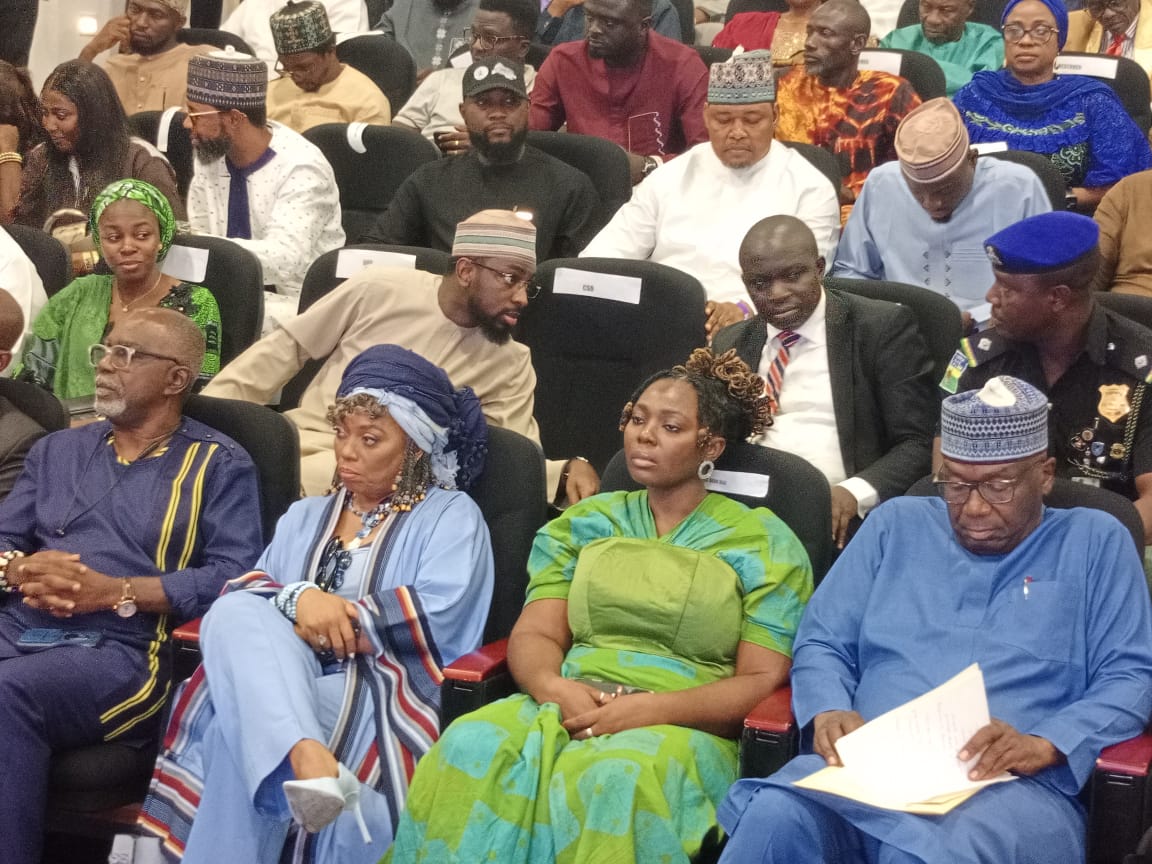
The Kwara State Government has celebrated the life and enduring influence of Afrobeat legend, Fela Anikulapo-Kuti, with a retrospective exhibition aimed at preserving African cultural heritage and inspiring younger generations.
The exhibition, titled Fela Anikulapo-Kuti: A Retrospective, was opened by Governor AbdulRahman AbdulRazaq at the Institute of Contemporary African Art and Film in Ilorin on Monday.
The Governor said the establishment of the institute reflected his administration’s belief that development should extend beyond physical infrastructure to include spaces that promote creativity, knowledge and economic opportunities.
“When we established the Institute of Contemporary African Art & Film, our vision was clear: development must go beyond roads, bridges and buildings to create spaces for creativity, knowledge and opportunity,” AbdulRazaq said.
According to him, cultural infrastructure plays an important role in connecting people to their history, broadening their imagination and encouraging critical thinking.
“Physical infrastructure connects places; cultural infrastructure connects people to their history, expands their imagination and challenges their thinking,” the Governor said.
AbdulRazaq said the institute was established to preserve African stories, nurture talents and showcase the continent’s artists and thinkers to the world,
describing the decision to open the institution with an exhibition dedicated to Fela as significant, given the musician’s contribution to African music, social commentary and cultural expression.
“Fela was more than a musician. Through his music and artistic expression, he challenged conventions and confronted society with questions about power, freedom, identity and justice,” he added.
The Governor added that the late musician’s life demonstrated the capacity of artistic expression to influence public discourse and inspire social change.
The exhibition, curated by June Creative Art Advisory, led by its founder, Mrs Seun Alli, featured photography, archival materials, film, graphic works and other artistic expressions exploring Fela’s life, times and enduring influence.
AbdulRazaq commended the firm for bringing its curatorial expertise and creative vision to the project, while describing the exhibition as an opportunity for different categories of visitors to engage with the musician’s legacy.
He said the exhibition would provide students with learning opportunities beyond the classroom, inspire artists, support researchers and encourage young people to explore the creative industry.
“For students, this is a classroom beyond the classroom; for artists, inspiration; for researchers, an opportunity for deeper inquiry; and for young people, a reminder that creativity offers both self-expression and economic opportunity,” he said.
The Governor clarified that the state government was not claiming ownership of Fela’s story but was providing a platform for younger generations to encounter and learn from his legacy, adding that the state government is optimistic that the institute would promote cultural education, encourage creative enterprise, attract visitors and strengthen Kwara State’s position in Nigeria’s cultural and creative landscape.
According to him, the institution’s success would be measured by the talents it nurtured, the ideas it inspired and the opportunities it created.
“Governments change, but institutions should endure,” the Governor said, expressing the hope that the exhibition would mark the beginning of sustained cultural engagement at the institute.
“May this exhibition begin sustained cultural engagement at ICAAF and inspire our young people to create, question, discover and contribute to society,” he said.
AbdulRazaq added that the initiative reflected his administration’s commitment to building a state where cultural heritage, innovation and economic opportunities complemented one another.
In her address, the Commissioner for Communications, Hon. Bolanle Olukoju, said: “Today’s exhibition offers us an opportunity to revisit the life and works of Fela
Anikulapo-Kuti and appreciate how his music, ideas and artistic expression continue to influence generations.
“For the Ministry of Communications, this occasion speaks to an important part of our
mandate: promoting the stories, talents and creative expressions that shape our identity as a people.”
The Commissioner particularly noted that under Governor AbdulRazaq’s leadership, the State is creating opportunities for young people through investments in sectors such as film, fashion and technology.
She added: “Projects including
the Sugar Film Factory, the Garment Factory and the Ilorin Innovation Hub reflect the administration’s commitment to developing talent and supporting enterprise.
“The Institute of Contemporary African Art & Film, formerly the Ilorin Visual Arts Centre, adds an important dimension to this effort. It provides a platform for artistic expression, cultural learning and creative collaboration.
“We want young Kwarans who are passionate about painting, photography, filmmaking, fashion and design to see ICAAF as a place where they can explore their interests, learn from others and showcase their talents.
“We also encourage students to engage with art and history beyond the classroom. Fela’s story is a fitting subject for this exhibition. It demonstrates how creativity
can go beyond entertainment to shape cultural identity and influence public conversations. There is much for our young people to learn from his artistic journey and enduring impact.
“It might also interest you that kwara state was also part of Fela’s creative showcase during his lifetime.”
•••Says Ward stands with APC
Stephen Olufemi Oni, Ilorin
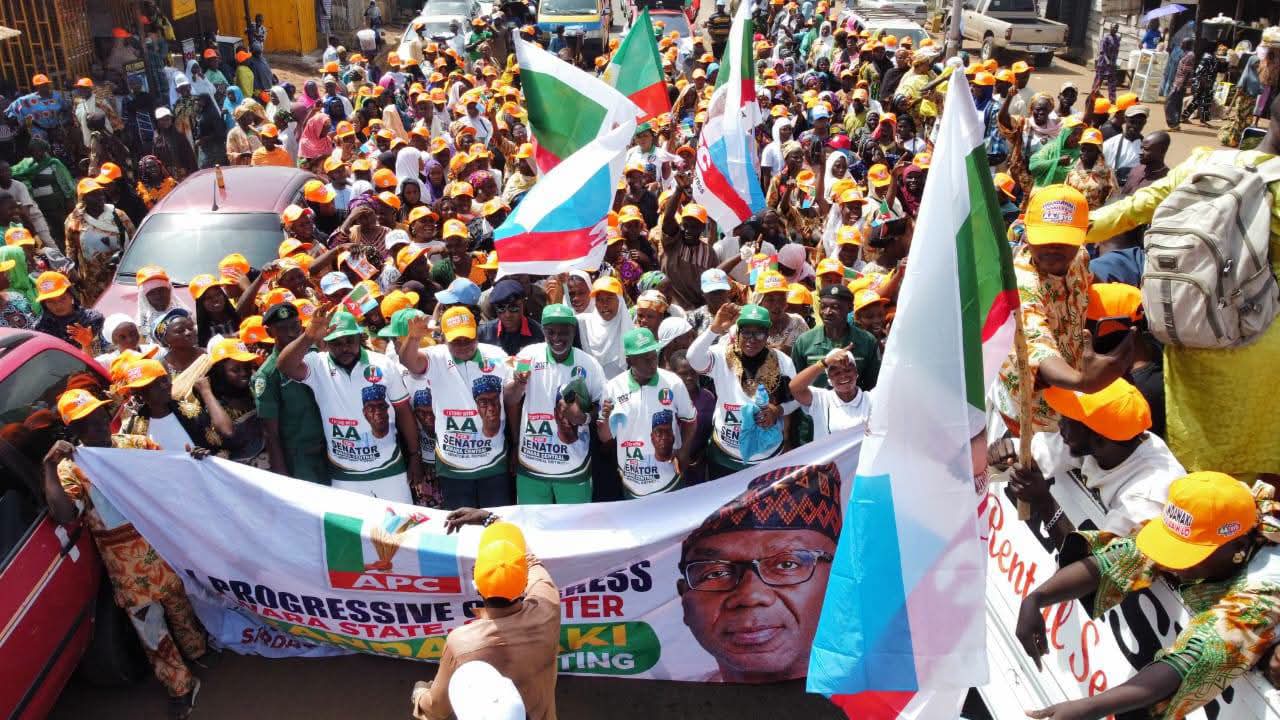
The Executive Chairman of the Ilorin West Local Government, Mallam Shehu AbdulRahman Babatunde Ladan, has led an All Progressives Congress (APC) mega rally in Ubandawaki Ward, reaffirming the commitment of party members and supporters to the APC ahead of the 2027 general elections.
The rally attracted party leaders, grassroots mobilisers, youths, women, and other stakeholders who gathered to demonstrate their support for the party.
Addressing the gathering, Chairman Ladan declared that Ubandawaki Ward remains committed to the APC and its political leadership, expressing support for President Bola Ahmed Tinubu’s Renewed Hope Agenda, Kwara State Governor AbdulRahman AbdulRazaq, and the APC governorship candidate, Rt. Hon. Engr. Yakubu Danladi-Salihu (SYD), alongside other party candidates for the 2027 general elections.
The Chairman emphasised the importance of unity, peaceful political engagement, and sustained grassroots mobilisation in strengthening the party’s structure ahead of the forthcoming elections, urging party faithful to remain united, engage constructively with residents, and work collectively towards the party’s political objectives.
Ladan also acknowledged the importance of Ubandawaki Ward in the political landscape of Ilorin West, encouraging party leaders and supporters to maintain cordial relationships, promote inclusive participation, and sustain engagement with the electorate. He stressed that a united party structure would help strengthen internal cooperation and effective grassroots coordination.
The mega rally renewed calls for unity, loyalty, and peaceful political participation among APC members and supporters, underscoring commitment by participants to mobilising support for the party’s candidates ahead of the 2027 general elections, while promoting peace, development, and responsible democratic engagement across Ilorin West Local Government Area.
- Mgt Accuses Union Of Dishing Out False Staff Remuneration Scale
Stephen Olufemi Oni, Ilorin
The staff of the Kwara State Internal Revenue Service (KWIRS) have lamented poor welfare conditions, rising living costs and stagnant salaries they have been subjected to, despite their contributions to the state’s revenue generation.
In a statement issued by the KWIRS chapter of the Association of Senior Civil Servants of Nigeria (ASCSN), the workers lamented that their sacrifice and professionalism, which have helped to place Kwara State among the more self-reliant states in the country, have not been matched with corresponding improvement in their welfare.
The workers questioned the disparity between their contributions to the state’s revenue and their welfare, saying many of them are battling financial hardship.
“We block leakages. We are posted to hospitals and other MDAs to secure government revenue. We work under pressure day and night but we continue to struggle to meet basic needs due to poor salaries.”
The association further expressed concern that personnel costs had remained unchanged for years while other expenditure heads had continued to increase.
It also cited a salary negotiation agreement dated October 11, 2022, which reportedly stated that the adjustment would be implemented “as soon as it can be accommodated in the budget.”
According to the workers, nearly four years after the agreement, there had been no implementation or clear indication of when the adjustment would take effect, despite the rising cost of living.
The staff said expenses on school fees, house rent, transportation and food had increased significantly while their salaries remained unchanged. “We smile outside but the majority of us are bleeding inside. We cannot continue to generate wealth for the state while we wallow in abject poverty,” they declared.
Urging their colleagues to remain united and resolute in pursuing improved welfare, the association said the workers should not expect better conditions without collectively standing up for their interests.
It called on members to remain calm, vigilant and prayerful as a 14-day period beginning October 15, 2026, counts down, without specifying further details in the statement about the expected action at its conclusion.
Reacting to the KW-IRS staff allegations, the Management, while
reaffirm its commitment to professionalism, political neutrality and its statutory mandate, expressed dismay over public speculation on staff remuneration and attempts to politicise unverified internal administrative communications.
“Management is concerned by attempts to exploit unverified internal administrative communications for political purposes, create unnecessary tension and distract the Service from its responsibilities. KWIRS will not be distracted from its mandate by such narratives,” said the Management.
It added: “The isolated salary figures being circulated on social media do not represent the full remuneration structure or total emoluments of KWIRS staff. Staff compensation extends beyond regular monthly salaries and includes the following benefits, in accordance with applicable policies and approved arrangements:
“Annual and Performance-Related Bonuses: Annual, festive, and situational bonuses linked to revenue performance milestones and staff performance and situational economic palliatives are paid periodically to staff members
“Annual Leave Allowance: A separate annual payment in addition to regular monthly remuneration.
Staff Welfare and Operational Support: Structured measures designed to support staff welfare and professional development throughout their careers.
“Accordingly, assessing staff remuneration solely on selectively circulated salary figures presents an incomplete picture of the Service’s compensation and welfare structure.
“Management remains committed to staff welfare, motivation and professional development. The Service will continue to strengthen policies and operational processes that support staff well-being and performance, within government-approved resource allocations and applicable administrative frameworks. The Service remains one of the Government Institutions with the most recruitment requests and this is a testament of Management’s commitment to staff welfare.
“KWIRS urges members of the public, taxpayers and other stakeholders to disregard unverified and misleading narratives, verify information before sharing it, and rely on official Service communications for accurate information about its operations and staff policies.
“All stakeholders are encouraged to refrain from politicising internal administrative matters or spreading claims capable of undermining institutional harmony and public confidence.
“KWIRS remains focused on its statutory responsibilities and committed to mobilising revenue for the economic growth and sustainable development of Kwara State.”

WHO: Nigeria Records Zero Ebola Cases After Evacuation of Swiss Couple

Kwara celebrates Fela’s legacy with retrospective exhibition

2027: Ilorin West LG Boss Leads APC Mega Rally In Ubandawaki

-
 Uncategorized6 years ago
FG, states urged to harness flooding for ranching, others with technology – Agbaje
-
 Headlines11 years ago
Breaking: EFCC seals Borno House of Assembly, as Hon members take to their heels
-
 News12 years ago
Nigeria Security Operatives Stage Manhunt For Homosexual Perpetrator
-
 News10 years ago
How 21-year-old Girl fled community over accusation of lesbianism
-
 News11 years ago
Yobe Gov Moves Against Deputy
-
 Opinion7 years ago
7 signs she has friend zoned you
-
Technology5 years ago
Online job placement company headhunts women
-
 Headlines10 years ago
Borno Dep Gov Abducts Another Church Leader