
Business
Reversal of 43 banned items, a policy summersault: MAN VP

* Says reversal dangerous, poisonous to nation’s economy
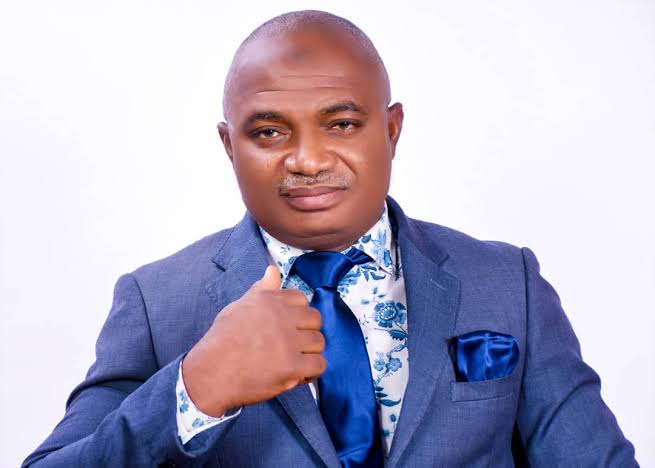
Dr. Kamoru Yusuf (MON), who is the Group Managing Director of KAM Holding Limited, located in Ilorin, the Kwara state capital, is also the Vice President of the Manufacturers Association of Nigeria (MAN), South-West Zone, as well as Chairman Basic Metal, Iron and Steel and Fabricated Metal Products Sector. In this interview with selected journalists, he bares his mind on sundry economic issues, including the implications and envisaged dangers on the reversal of the 43 items on the prohibition list by the Central Bank of Nigeria, (CBN) as well as the possible solutions. Stephen Olufemi Oni was there. Excerpts;
Can you tell us the genesis of the ban placed on the 43 items by the administration of former President Muhammadu Buhari?
There is no doubt that the Nigerian economy is facing challenges just like every other nation of the world, especially developing countries or what we regard as third world nations. All efforts put in place by successive governments are always met with numerous challenges, especially when a new administration is inaugurated. There are always errors in decision making techniques of new administrations due to lack of far- reaching consultations and non-inclusion of appropriate stakeholders that can further provide genuine working ideas and templates for the good of the nation.
However, for the sake of emphasis, I make bold to take Nigerians back to memory lane on the 43 items that were banned by the previous administration under the Muhammadu Buhari-led government. It would be recalled that the Nigerian government called for the service of one of the big four audit and advisory firms in Nigeria (KPMG) to work with the Ministry of Industry, Trade and Investment which final result was advocacy on the Industrial Revolution Plan on Backward Integration, as well as Ministry of Finance working with a firm called Makinson in order to bridge the gap of our economy which solely relies on crude oil.
The policy was to encourage the non-oil sector and manufacturers to increase the GDP and to create jobs which drive many investors to inject energy into backward integration. In 2015 when the global recession started, which Nigeria was not spared, the economic team, led by the former Coordinating Minister of Economy, Dr. (Mrs) Okonjo-Iweala and the Minister of Industry,Trade and Investment, Dr. Olusegun Aganga, as well as other Ministers, Authority of Nigeria Customs Service, Presidential Committee on Trade Malpractices (PCTM), the Governor of Central Bank Nigeria (CBN), all the CBN Deputy Governors and their Directors, the Secretary to the Federal Government and some Captains of Industries and Bureau of statistics, came together to analyse some items that were putting pressure on demand from Apex bank weekly and some of the items that the nation had capacity to do away with. In total, about 100 items were listed and later streamlined to 43 items by the Committee and their Board of Trustees.
Can you mention some of the banned products and your take on their reversal?
Of course yes, some of these items are very critical to the Nigerian economy. For instance, let me highlight some of the items as they affect cement production, rice production and the steel sector.
For cement production, it was discovered that we have mineral resources for production of cement and there are existing investors who have 10 years backward integration plan in order to increase the capacity yearly as they already have the capacity to make it happen, which is the major reason why they are listed so that other investors will be encouraged to join the backward integration plan.
As for rice production, statistics showed that billions of dollars FX demand was required from Apex bank for importation of Rice from Thailand annually. The FX is what the government of Thailand was relying on for their yearly budget. These made the government to announce the rice policy in order to encourage local manufacturers of rice to instal rice Mills across the country to enhance padding from local farmers.
Unfortunately, COVID-19 distracted the policy as all the padded available in storage that was meant to be used to control the rice price and quantity was what the rice mills across the country used to survive during the pandemic period when people were restricted from going out and farmers were also restricted from going about their farming activities. These in turn put pressure on rice production which created shortages on padding.
As for the steel sector, there are
sufficient steel plants in Nigeria. The government discovered that the current local capacity was sufficient for our local demand in the area of 11 to 23 as listed in the restricted items. It can be deduced from statistics that since 2017, the importation of items 20, 21 and 23 has reduced to about 3 percent which makes the demand on FX for the Apex bank to be at almost zero level.
I want the federal government to know that the major problem at the moment is the demand that is higher than the supply in the FX market. Therefore, reversal of the 43 items is a policy summersault which is not only dangerous but also very poisonous to our nation’s economy.
What do you think are likely implications of the ban reversal on the Nations economy?
Nigeria is currently at a very dangerous state, her economy is posed to numerous challenges and risks and there is no gain saying that the effect of the reversal and removal of ban on the 43 items will cause serious setbacks on the production sector thereby impacting negatively on virtually all other critical facets of human endeavours such as unemployment, youth restiveness, wrong declaration at the ports, importation and flooding Nigerian markets with substandard products and among all, proliferation of the nation with arms and ammunition. As I speak with you, most financial institutions are really confused, and this policy if not quickly reversed, may lead to the distress of some banks while massive loss of jobs is looming. The CBN can seek the opinion of banks in Nigeria individually on this Free Trade Zone, lost tax and revenue.
What will you proffer as possible solutions to this economic quagmire?
Part of the possible solution is the immediate review of the policy surrounding the free trade zone in Nigeria which has been abused seriously and which adds little or no value to our economy in generating FX rather than destroying it. Government needs to investigate and harvest the comprehensive list of the companies that registered under the free trade zone, inclusive of the value of their investments.
It is observed that 60 percent of the goods coming into the country from Asia continents are finished products which can be valued around USD800 million of which some of them are substandard. As a result of this, the Nigeria Customs Service is losing about 300 billion naira which was supposed to be generated through Duty Revenues every month which some of the aforementioned products were imported under the guise of the free trade zone. More over, the law governing the Free Trade Zone prevents the Federal Inland Revenue (FIRS) from generating taxes on all the goods brought in through the Free Trade Zones.
It is worthy to note that these goods will be sold in naira and the importers want to repatriate the money back to their country in dollars and they have no other source of getting the money than to go to the black market window because the goods were brought into the country “dishonestly”. Therefore, they can afford to buy the dollar at any rate because they already have export rebates from their country for the finished goods exported to Nigeria.
However, Nigeria’s President, His Excellency, Asiwaju Bola Ahmed Tinubu is hereby advised to give the Minister of Trade and Investment the mandate to appoint an agency to look into the statistics and number of companies registered under free trade zone, conduct audit into what they are doing and what they claimed they want to do as well obtain data from Nigeria Customs Service for the value of goods coming into the country through the FTZ which is expected to serve as part of their KPI in the Ministry within a time frame as decided by Mr. President.
All the importers claiming to be manufacturers/investors in the free trade zone are the biggest scammers in Nigeria and causing problem in the FX black market as they are bringing the products of their parent companies into Nigeria under the guise of free trade zone without any payment of Taxes and duties, while all the goods end up being sold within customs territories.
What’s your advice to President Tinubu on what should be done by the Nigeria Customs Service?
I want to recommend that President Tinubu should order the Nigeria Customs Service, which has a robust platform, to submit the list of importers who have been bringing goods into the country in the name of free trade zone and their respective value(s) since 2018-till date in order to justify the amount they have repatriated out of Nigeria in the name of Free Trade Zone without payment of duty or any form of taxes to Nigerian government. Even those expatriates that produce in the Free Trade Zone using our local mineral resources are not bringing dollars, nor are they paying appropriate taxes to the Nigerian government.
Instead, what they are doing is repatriating dollars out of the country.
What’s your advice to President Tinubu on the companies mining the country’s minerals?
The President should make it as part of the KPI of the Ministry of Solid Minerals to list all the companies that are mining our minerals such as; Gold, Lithium and Tantalum, among others, and exporting them out of the country. They cannot make Nigeria the country of shipment and make their countries as the beneficiary of the FX because what we need are the proceeds of what they mined and they are to return back to our country in dollars.
As at today, the unverified data has indicated that end users of Lithium abroad have brought in their machines and heavy equipment for mining of our Lithium in Nigeria. This implies that they will mine USD1 billion worth of minerals monthly and only USD50,000 royalty will be paid to the government. Can you justify why Nigerian indigenes that are supposed to carry out these mining activities, sell to abroad and bring the proceeds back into Nigeria do not have access to Mining Rights? For example, a country like India, which discovered a large quantity of Lithium, made a policy to generate Fx through Lithium.
Many gold/lithium miners and commodity exporters in Nigeria are keeping about 70 percent Forex of their sales proceeds in foreign bank accounts because there is no law in Nigeria that controls the value of the FX earning on their exports Vis-à-vis the money that comes back to Nigeria’s Apex bank.
Federal government of Nigeria, as a matter of priority, needs to put in place the same policy use for the sale of crude oil per barrel in to the sales of gold, lithium and other minerals per ton through the database of Nigeria Export Promotion Council (NEPC)
What do you think the federal government should do to protect Nigeria’s mining sector?
There is urgent and serious need for the Nigerian government to take lessons from what is happening in the Republic of Niger wherein, there’s in-fighting on the issues surrounding mining activities. The proceed of the resources being mined are exported out of their country, as the dollars they have in exchange do not come back to the Republic of Niger since miners in that country are not Nigeriens, which means that their country doesn’t have sufficient means of foreign exchange and in turn, it will have great impact on the inflation on foreign currency.
Therefore, the federal government might need to initiate a policy that will ensure total ban of exportation of raw metals in the mining sector, except wherein values’ additions have been created before exportation is allowed.
What’s your take too about the Nigerian steel sector?
Steel sector plays similar role as that of Cement, Sugar, fertiliser and petrochemical industries, all of which can provide the needed nine for the development of other light industries in the country. The incremental and progressive results being witnessed by them was the outcome of the success story of the indigenous players in the cement industry over the past nine years and with reduced stake from the offshore investors. The best model is to indigenise and empower Nigerians and ensure that the strategy as encapsulated in the Nigeria Industrialisation Revolution Plan (NIRP) creates avenues for whosoever wishes to partner with the local giants who have verifiable track record in the industry to do so.
What do you think can be done by the federal government to make Ajaokuta Steel Rolling Mill work?
Another point of urgent attention is for Mr. President to make it as part of the Minister’s KPI (performance bond) to make sure that Ajaokuta Steel which is a great national asset is not in the hand of foreigners because if this happens, all its benefits will be repatriated out of the country, whereas there are capable Nigerians who can make Ajaokuta Steel to run in full capacity in the same way it is done in the cement, which as at now, they have started its replication in the petrochemical.
All accruing benefits will remain in our country without having to repatriate forex out of the country. All that is required is for the government to identify some patriotic Nigerians that will make this happen within a very short time and maximum support from the government. By this, the investment will remain in Nigeria and with Nigerians with more productivity and reward for the nation. It is also expected to be reminded that the first bitter lesson that the government experienced with over 10 years setback during the concession of Ajaokuta Steel to foreigners without adding any meaningful value(s) and in turn, ended in litigation and at the end of the day, half a billion dollars was claimed from the Nigerian Government. This is so sad because such money could have been injected into the nation’s economy to provide infrastructure, create more jobs and used to further stabilise the economy.
Another bitter lesson is Delta Steel which was sold to foreigners at a token value of N31 billion, despite that, they could not make us proud of such a giant steel plant. So, what magic can they perform in Ajaokuta that we the Indigenes cannot do?
Let me remind you that skill acquisition is the same all over the world, only skin colour that is different.
Another way that could be easily employed is for the government to urgently channel the Comprehensive Import Supervisory Scheme (CISS) charges paid to the Nigeria Customs Service (NCS) over the years to providing bailout and support to the steel sector. Such money should be utilised to drive the industrial revolution process that will galvanise national industrial development.
There will be no reason for the government to be worried about bringing Ajaokuta back to life. We have the resources as a nation and we also have expertise who can make it work. We don’t need foreign investors to do it. Ajaokuta can be back again to produce automobile cars and other associated raw materials for downstream industries
You will agree with me that with the gigantic size of Ajaokuta, the complex should not focus on the middle-steel production, which are massively available around Nigeria and West Africa. Rather, it should focus on the configuration of a high class production of steel products such as Slab Caster, Hot Rolled Coils and Plates, and Foundry for the production of the required machinery and tools in the country, since 50 percent requirement for these high-class configuration are already available in Ajaokuta. However, we still welcome more opinions and contributions towards developing our sector for better performance to the benefit of our dear country and humanity at large.
There are lots of patriotic Nigerians who are dedicated and ready to serve their country truthfully in their respective sectors and expertise such as our great mentor, Alhaji Aliko Dangote GCON, Alhaji Abdulsamad Rabiu CON, KAM HOLDING, INNOSON, ENRICSON to mention a few. These individuals are owners of fully established business brands in Nigeria that can be trusted with deliverables on state of the art which will have positive impacts on the nation’s economy.
What’s your advice on the Export Promotion Council?
The President or the supervisory agency needs to have monthly reports of the export proceeds with the accrued revenue generated from the exports from the raw materials such that the proceeds won’t be stashed away into individual/corporate foreign bank accounts abroad instead of Central Bank of Nigeria. The presidency needs to look into this, especially with many unethical practices being played in the mining sector of the economy.
How about the Federal Inland Revenue Service (FIRS)?
It might be necessary for the FIRS to have field offices within FTZ (Free Trade Zones) across the country, as many of the investors are importing finished goods instead of following the Free Trade Zone Acts of the percentages of the ‘value additions’. Where mining/extraction of natural resources are taking place, 70-80 percent of such exported goods/shipments are done in this zone areas “undocumented” by Nigeria Customs Service at the exit ports. Therefore, actions need to be taken in this direction if the government wants to come out of the woods of this FX maladies.
Any investor(s) coming into Nigeria should be asked to submit their business plans certified by international advisory firm, because many investors that come into the country usually overstate their investment portfolios with the intention of fooling our government because there is no demand for the verification which calls for audit and proper monitoring as some of them will come into the country with just 10 million dollars and build up same in the documentations with the supervisory agency of the government at 100 million dollars since there is no proper monitoring or organisations that checkmate them. The government of Nigeria needs an all-inclusive review of the 43 items restricted from accessing FX in the I$E window as this will put further pressure on the official market with an indirect impact on the parallel market as well.
The current Price Verification Systems recently launched by the Apex Bank (i.e CBN), as this will checkmate round tripping in its own objectives as well as curb price inflation. Also, the platform is having technical issues of uploading line items using XML format. Wherein the XLS format is utilised, there are missing items on the uploaded items. The approval/rejections time/period needs review as some take more than two to three weeks before approval of rejection notice is received. These observed challenges need to be looked into for adequate enhancement and engagements of the platforms in tandem with the set objectives it’s set out to achieve.
The Federal government needs to continue with the bold steps it has already taken in the liberalisation of the FX market and the eventual subsidy removal on petroleum products which in the long term if these suggestions are followed religiously with further attendant consultations will yield a greater impact and turn around the country’s economy for the good of all.
What is your take on the Nigerian Economy vis-à-vis the African Continental Free Trade Area?
The only way Nigeria can participate successfully in the African Continental Free Trade Area (AfCFTA) and successfully compete among countries in the continent is to develop our giant industries. We can look at China, which always underwrites their capital projects under Sinosure (China Credit Insurance Corporation).
The Federal Government should also borrow a leaf from other developed nations as well as some African countries by creating platforms for Credit Insurance Underwriters in order to reduce the huge risks involved in capital projects. Government also needs to create more funding windows and other support infrastructure to elicit rapid industrial development.
There cannot be significant growth in the sector without the intervention of the Federal Government where and when necessary. Government should be the driving force behind the steel industry, which has the capacity and potential to resolve part of our social unrest by getting thousands of unemployed youths off the streets through direct and indirect job opportunities.

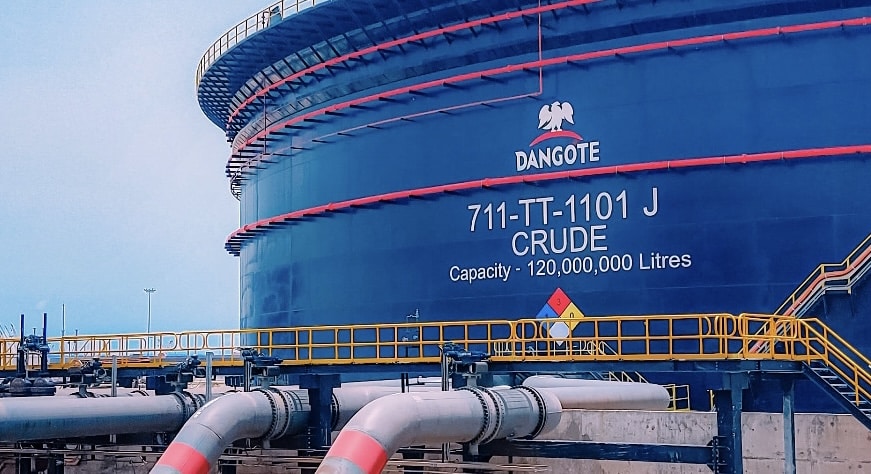
The public offer for shares in Dangote Petroleum Refinery and Petrochemicals has officially started on the Nigerian Exchange (NGX).
The shares are being offered at N525 each.
Dangote Industries Limited President and CEO, Aliko Dangote, officially launched the offer on Monday by ringing the opening bell at the NGX trading floor in Lagos.
This is a major development for Nigeria’s capital market because Dangote Refinery is the first refinery in the 66-year history of the Nigerian Exchange to offer its shares to the public.
A total of 4.1 billion new shares are available for investors to buy. Both individual and institutional investors, including eligible investors across Africa, can participate.
Investors can buy a minimum of 10 shares, which will cost N5,250 at the offer price.
The public offer opened on September 14, 2026, and will close on October 13, 2026, based on the terms in the offer prospectus.
Speaking at the launch, Dangote said the move is part of his plan to give more people the opportunity to own shares in his companies.
The event was attended by several important figures, including Lagos State Governor Babajide Sanwo-Olu, members of the Dangote family and other business representatives.

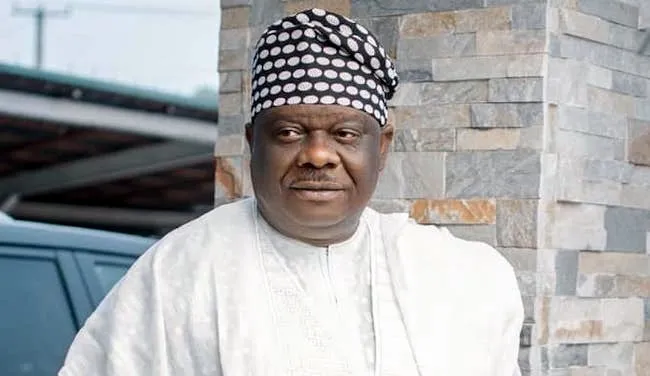
Justice Daniel Osiagor of a Federal High Court, Lagos, has granted an interim orders restraining Nigeria’s former Attorney-General of the Federation/Minister of Justice, Mr. Michael Kaase Aondoakaa (SAN) and his company, Mikap Nigeria Limited, from tampering, dealing with the company’s properties and funds over an alleged unpaid N2 billion debt.
Others affected by the interim orders include:
Samuel Iorhen Aondoakaa; Professor Godwin Abu; Nguvan Susanna Aondoaka; Engr. John Tsav; Innocent Igbalagh Aondoakaa; Venda Joseph and Lausa Samuel, listed as former AGF’s codefendants in the debt recovery suit marked FHC/L/CS/06/2026, instituted by Keystone Bank Limited, through its lawyer, Adekunle Babatunde Ogunba (SAN).
Justice Osiagor made the restraining order while granting an Exparte Motion filed by the bank through Ogunba (SAN)
Other orders made by the Justice Osiagor include: “that an order of interim injunction is granted restraining the defendants/respondents, the Defendants’ Directors, Staff, Employees, Officers, Agents. Privies or any other person or group of persons whatsoever under the defendants/respondents’ authority or any other authority (however derived or sourced) from interfering with, obstructing or otherwise disturbing the Receiver/Manager appointed by the Plaintiff/Applicant over the affair and endeavours of the 1st defendant/respondent, in the execution of his statutory duties or tasks ancillary there to pending the hearing and final determination of the Motion on Notice for Interlocutory Injunction.
“That an interim order is granted authorising the plaintiff/applicant herein and/or its duly appointed Receiver/Manager to take over and preserve all the assets, funds, shares, etc. of the 1st defendant, pending the hearing and final determination of the Motion on Notice; particularly the under-listed pledged properties/assets:
“That an order is granted directing all companies dealing with the 1st defendant (Mikap Nigeria Limited) “to recognize and only deal with the duly appointed Receiver/Manager appointed by the plaintiff/applicant as the only one vested with the requisite powers to act on behalf of the 1st Defendant forthwith pending the hearing “a and final determination of the Motion on Notice.
“That an order of interim injunction is granted restraining Mikap Nigeria Limited RC-160854 (the 1st Defendant) with their funds in any bank and financial institution within the jurisdiction.
“That an order is granted directing all the banks and/or financial institution in Nigeria and other company contractually obligated to the 1st defendant, Mikap Nigeria Limited, to furnish the Receiver/Manager and /or office the details of any sums outstanding to the credit of the 1st defendant, Mikap Nigeria Limited within seven (7) days of being furnished/availed the Interim order of court in this suit.
“That an order of interim injunction is granted restraining the 1st to 9th defendants/respondents, their agents, servants, cronies, assigns and/or privies by whatsoever name called from disposing of, selling, mortgaging, pledging or otherwise transferring, appropriating or dealing with the pledged assets of the 1st to 9th defendants/respondents and properties/assets or any other assets/funds of the 1st to 9th defendants, without regard to the vested tight of the plaintiff/applicant, the Appointor of the duly appointed Receiver/Manager over the pledged Assets of the 1st to 9th defendants/respondents pending the hearing and final determination of the he Motion on Notice.
“That an order is granted directing the Assistant Inspector General of Police Zone 2, Lagos, Commissioner of Police, Lagos State, Commandants, Nigerian Civil Defence Corps Lagos of State Command, their Deputies, Assistants and all other officers under them or other Law Enforcement officers/Personnel as may be deemed appropriate by the Receiver/Manager, to assist the said Receiver/Manager in his Lawful duties, function, responsibilities and performance of his lawful duties as Receiver/Manager over the pledged Assets of the 1st to 9th defendants/respondents in accordance with the tenure of the subsisting instruments pending the hearing and final determination of the Motion on Notice filed along herewith.
“That an order for leave is granted to the Plaintiff/Applicant to effect service of the following to wit; (1) the Order of this Honourable Court, (2) the Originating Summons, (3) Motion on Notice, and ali other subsequent processes to be filed in this suit on the 2nd-9th Defendants by posting same at their last known address being KM 5, gboko Road, Makurdi, Benue State.
“That an order is granted deeming the service of the processes listed in prayer 8 above, and all other subsequent processes to be filed in this suit on the 1st- 9th Defendants as good and proper service aforesaid processes.”
Hearing of the substantive suit has been adjourned to March 5, 2026.
Meanwhile, counsel to the defendants, Mr. M. S. Diri (SAN), has petitioned the Chief Judge of the Federal High Court, seeking a transfer of the case from Lagos to the Makurdi Judicial Division.
The defendants argue that all parties reside and conduct their businesses in Makurdi, Benue State, and that the alleged debt arose from transactions at the bank’s Makurdi branch. While further contend that related suits are already pending before the Benue State High Court and the Federal High Court in Makurdi.
However, the plaintiff, Keystone Bank, through its counsel, Adekunle B. Ogunba (SAN) opposed the transfer request, describing it as procedurally defective for being made via correspondence rather than a formal application.
Ogunba (SAN) insists that the loan facility originated from its Lagos Head Office under a Central Bank of Nigeria scheme and that the Receiver/Manager operates principally from Lagos.
Ogunba SAN also cited constitutional and statutory provisions, stating that the Federal High Court is a single court with nationwide jurisdiction, rendering the choice of division largely administrative.
A legal dispute has emerged between Mikap Nigeria Limited and Keystone Bank over claims of indebtedness and alleged abuse of court process.
The company has accused the bank of initiating receivership proceedings despite allegedly being indebted to Mikap Nigeria Limited. According to sources familiar with the matter, the action filed in Lagos State has been described as malicious and an abuse of court process.
A source close to the company questioned the bank’s decision to file a suit in Lagos instead of Makurdi, where Mikap Nigeria Limited is based. “How can Keystone Bank leave Makurdi, where the company operates, to institute an action in Lagos against the same company? It clearly raises concerns about abuse of court process,” the source said.
Court documents reviewed by this newspaper indicate that in Suit No. MHC/119/2024, the bank did not state that Mikap Nigeria Limited was indebted to it during its defence.
Further findings show that the Federal High Court sitting in Makurdi, in Suit No. FHC/CS/M/117/2025, restrained Keystone Bank from tampering with the bank accounts of the directors of Mikap Nigeria Limited. The Makurdi suit reportedly predates the fresh action subsequently filed by the bank in Lagos.
Investigations also reveal that Mikap Nigeria Limited has maintained a strong credit standing in Benue State since commencing operations in 2011. The company is said to have repaid facilities previously obtained from Access Bank and the Bank of Industry.
Sources further claim that the facility at the centre of the dispute remains active and that the company has not been declared in default.
Efforts to obtain official comments from Keystone Bank were unsuccessful as of the time of filing this report.

WHO: Nigeria Records Zero Ebola Cases After Evacuation of Swiss Couple

Kwara celebrates Fela’s legacy with retrospective exhibition

2027: Ilorin West LG Boss Leads APC Mega Rally In Ubandawaki

-
 Uncategorized6 years ago
FG, states urged to harness flooding for ranching, others with technology – Agbaje
-
 Headlines11 years ago
Breaking: EFCC seals Borno House of Assembly, as Hon members take to their heels
-
 News12 years ago
Nigeria Security Operatives Stage Manhunt For Homosexual Perpetrator
-
 News10 years ago
How 21-year-old Girl fled community over accusation of lesbianism
-
 News11 years ago
Yobe Gov Moves Against Deputy
-
 Opinion7 years ago
7 signs she has friend zoned you
-
Technology5 years ago
Online job placement company headhunts women
-
 Headlines10 years ago
Borno Dep Gov Abducts Another Church Leader