
Uncategorized
THE TURMOIL IN THE AREWA CONSULTATIVE FORUM (ACF): ONE CRISIS TOO MANY FOR THE NORTH

Recent news coming out of Kaduna regarding the leadership crisis in the ACF has been unsettling. The ACF is one of Nigeria’s foremost socio-cultural organisations. It was established about two and a half decades ago with the singular objective of promoting the unity and development of the northern region. It was against this backdrop that the ACF maintains its headquarters in Kaduna, the capital of the defunct Northern Region. Being in Kaduna represents a symbolic preparedness by the ACF to uphold and promote the vision of the region’s founding fathers: the Sardauna, Ahmadu Bello, Tafawa Balewa, Kashim Ibrahim, Aminu Kano, Joseph Tarka, etc.
Kaduna, as host of the ACF, means many things to many people: the hotbed of northern politics; the enclave of retired northern generals; and home of the faceless “Kaduna mafia,” a powerful club of Nigeria’s political wheeler-dealers in the 70s and 80s. There was also the New Nigerian newspaper house in Kaduna that shaped not only the political opinion of the North but also that of the nation at large. Its editorial position literally constituted a policy blueprint of sorts. With the demise of the prominent personalities and institutions behind the northern vision in the twilight of the 20th century, many saw the emergence of the ACF as their collective reincarnation. However, with recent developments, it could just be a misplaced hope.
Established in 2001 by eminent northerners that included General Yakubu Gowon, Sultan Maccido of Sokoto, the Shehu of Borno, the Emir of Ilorin, elder statesmen Abdulrahman Okene, Sule Katagum, Sunday Awoniyi, Jerry Useni, MD Yusuf, Maitama Sule, Saraki (snr), among others, the ACF emerged as an amalgam of three prior northern sociocultural groups: the Turaki Committee under Shagari, the Northern Elders Committee led by Okene, and the Unity and Development Foundation under Sule Katagum. The trio were involved in finding solutions to the perennial crises manifesting across various parts of the region at the time, including Plateau, Taraba, Benue, Kaduna, Bauchi, etc. The ACF subsumed the three with a view to engendering greater impact.
Some of the broad objectives of the Forum include:
To coordinate efforts to build trust, unity, and stronger relationships among the peoples of Northern Nigeria and the nation at large.
To establish linkages with political and community leaders to harmonise efforts aimed at addressing the peculiar challenges facing Northern Nigeria and the country as a whole.
To liaise and cooperate with relevant local, national, and international organisations and agencies that can advance the attainment of the Forum’s objectives.
To establish and develop relationships with organisations that share similar aims, objectives, and aspirations.
To promptly coordinate efforts aimed at building bridges, fostering confidence, and strengthening relationships among the peoples of Northern Nigeria in particular and Nigeria as a whole.
To examine and deliberate on matters that can promote peaceful coexistence in Northern Nigeria in particular, and Nigeria in general.
To promote education and the socioeconomic development of the people of the North, among others.
To liaise and cooperate with relevant local, national, and international organisations and agencies that can advance the attainment of the Forum’s objectives.
In all, the ACF is out to foster unity, mutual trust, and cooperation among the peoples of Northern Nigeria and Nigeria as a whole; it collaborates to address regional and national challenges. Thus, today the ACF remains Nigeria’s most authentic pan-cultural organisation, operating far beyond the boundaries of any single ethnic formation. While many socio-cultural groups primarily represent specific ethnic interests, the ACF stands as a federation of diversity, accommodating the multiplicity of peoples, cultures, and interests across Northern Nigeria.
Its administrative structure is layered in such a way as to reflect the diversity of the region and also promote its unity. It therefore has a permanent Committee of Patrons, made up of all former Nigerian heads of state alive (Gowon, Babangida, Abdulsalami); a Board of Trustees (BOT); a National Executive Council (NEC); a General Assembly; an Executive Secretary, who serves as administrative head; state chapters; and various standing committees.
After its formation, the ACF hit the ground running. It responded to the killings of Northerners in the South-West by cultural organisations such as the OPC. The ACF also undertook peace missions to mediate in the ethno-religious and communal conflicts in Nasarawa, Plateau, Benue, Bauchi, and Taraba states, as well as in Kaduna State earlier on.
Outside the sphere of peace missions, the ACF was actively involved in several national dialogues. On behalf of the North, the Forum participated in the Oputa Panel, the 1999 Constitution Review Conference, and the National Political Reform Conference. Through these engagements, the ACF was able to formulate, articulate, defend, and promote the interests of the North effectively.
The Forum also mobilised the region to turn out en masse for both voter registration and national identity registration exercises. To its credit, the ACF equally played a significant role in frustrating Obasanjo’s attempt to secure a third term in office through a self-serving constitutional amendment. Ironically, the issue of tenure is alleged to be part of the issues currently tearing the organisation apart.
During the Buhari administration it engaged the government in the search for solutions to the problems of terrorism and insurgency in various parts of the North. It suggested a way out of the herders-and-farmers clash in the Middle Belt. It also engaged various governments in the fight against poverty and deprivation across the land and recently contributed to the formulation of the North’s position on the current government’s agriculture and tax policies.
Although it has not been a smooth ride, the ACF was able to command respect and visibility among a broad spectrum of Nigerians. Apart from the high calibre of personalities behind the Forum, its activities have elicited confidence among the majority of the peoples of the region. At a stage, various aspirants to the national leadership took turns seeking the “endorsement” of the organisation to enhance their prospects.
It was probably against the backdrop of the Forum’s modest achievements over the years that it marked its Silver Jubilee with pride in early 2026. It developed and presented its roadmap to Nigerians in general, which will guide its operations for the subsequent 25 years and beyond, in a commemorative book titled The ACF at 25: The Journey So Far. It also proposed building a conducive headquarters and embarking on empowerment programmes and policies for the youth and most vulnerable in the region in collaboration with the various tiers of government.
Other future plans include forging a working cooperation with other northern civil society organisations (CSOs) like the Middle Belt Forum (MBF), Arewa Cohesion for Peace, Unity and Development (ACPUD), Northern Elders Forum (NEF), CAN, JNI, the Dangote Foundation, TY Danjuma Foundation, Sir Ahmadu Bello Foundation, etc., for the good of the region and the nation at large. It was in view of such laudable initiatives of the ACF that the related fundraiser garnered “roughly” billion naira (N10 billion) in pledges and cash. Dangote, with N2.5 billion; AbdulSamad of BUA, N2.5 billion; TY Danjuma, N1 billion; Yari, N1 billion; etc., led the pack.
Barely three months after the event, the ACF got entangled in a factional power struggle that pitched its BOT members against the NEC, with part of the root cause being accountability challenges — a cankerworm that has literally become “a Nigerian thing.” How could one really explain a CSO like the ACF, which has been at the forefront of advocacy for good governance, unity, peace, and accountability, finding itself in turmoil? This is really a bad omen for the region in more ways than one.
The ongoing verbal conflict and leadership crisis in the ACF have literally become a new layer in the various “wars” across the geographic North, which have afflicted sixteen (16) states out of the nineteen (19), including the FCT. Insecurity in various areas has grounded economic activities and threatened the safety of lives and property.
The development has equally deepened the distrust among parts of the North that the ACF, in its later years, has not been inclusive enough. Some accuse it of being hijacked and used to promote the narrow interests of the feudal North, or better still, the Muslim North. Yet others believe it has been under the partisan hegemony of certain political blocs. It was at the point of weathering this storm and the gathering electoral clouds of 2027 that the tussle burst into the open, thereby casting a dark shadow on its integrity and future material support.
The way forward is to appeal to the conscience of the warring parties to sheathe their swords in both their individual interests/honour, and that of the region at large. Most of them are looked upon as role models, given their pedigree in public service and business. Above all, none of the major dramatis personae namely Mamman Mike Osuman, SAN, (NEC, Chair), Murtala Aliyu, Matawallen Gombe (Secretary General), Bashir Dalhatu, Wazirin Dutse (BOT, Chair) and General Haliru Akilu (rtd), among others, is outside the sexagenarian and septuagenarian age brackets. They should ordinarily serve as interlocutors in national crisis situations.
The North is already in bad shape politically, socially, and economically. The region cannot afford the luxury of tearing itself apart further. Religious insurgency, armed terrorism by herdsmen, and ethno-religious crises have already done enough damage, especially against the backdrop of the fact that over three million individuals have been displaced from their homes, tens of thousands needlessly killed, and agriculture — the mainstay of the economy — decimated by fifty percent (50%), thereby creating armies of the poor and desperate in its wake.
The living patrons of the ACF — Gowon, IBB, Abdulsalami — plus the traditional rulers, should intervene to broker peace. Thereafter, the alleged issues of corruption and other misdemeanours should be looked into by the appropriate authorities for justice to be done. The abuse of public trust must be stopped.
In the final analysis, the crisis in the ACF is far bigger than a mere organisational dispute; it is a test of the North’s collective maturity, sincerity of purpose, and capacity for self-correction. An institution that was built to unite, guide, and defend the interests of the region must not be allowed to degenerate into a theatre of personal ambitions, factional supremacy, and public recrimination. If the ACF loses its moral authority, the North risks losing one of the few remaining platforms capable of mobilising consensus across ethnic, religious, and political divides.
History is watching. The younger generation is watching. Millions of ordinary northerners battling poverty, insecurity, displacement, and hopelessness are watching. At a time when the region is bleeding from terrorism, banditry, economic collapse, illiteracy, and deepening social fragmentation, its elite cannot afford the dangerous luxury of internal warfare. The North needs healing, direction, sacrifice, and visionary leadership — not another cycle of destructive power tussles.
The founding fathers of the region built institutions, not personal empires. They subordinated individual ambitions to collective survival and regional advancement. That same spirit must now prevail within the ACF.
The Forum must rise above ego, purge itself of impunity, restore internal trust, and return to the ideals upon which it was founded: unity, justice, accountability, and service to the people. It should also place higher premium on strategy than history. Anything short of that would amount to a tragic betrayal of both history and posterity.
A.G. Abubakar
agbarewa@gmail.com
Stephen Olufemi Oni, Ilorin
The Kwara State Government has celebrated the life and enduring influence of Afrobeat legend, Fela Anikulapo-Kuti, with a retrospective exhibition aimed at preserving African cultural heritage and inspiring younger generations.
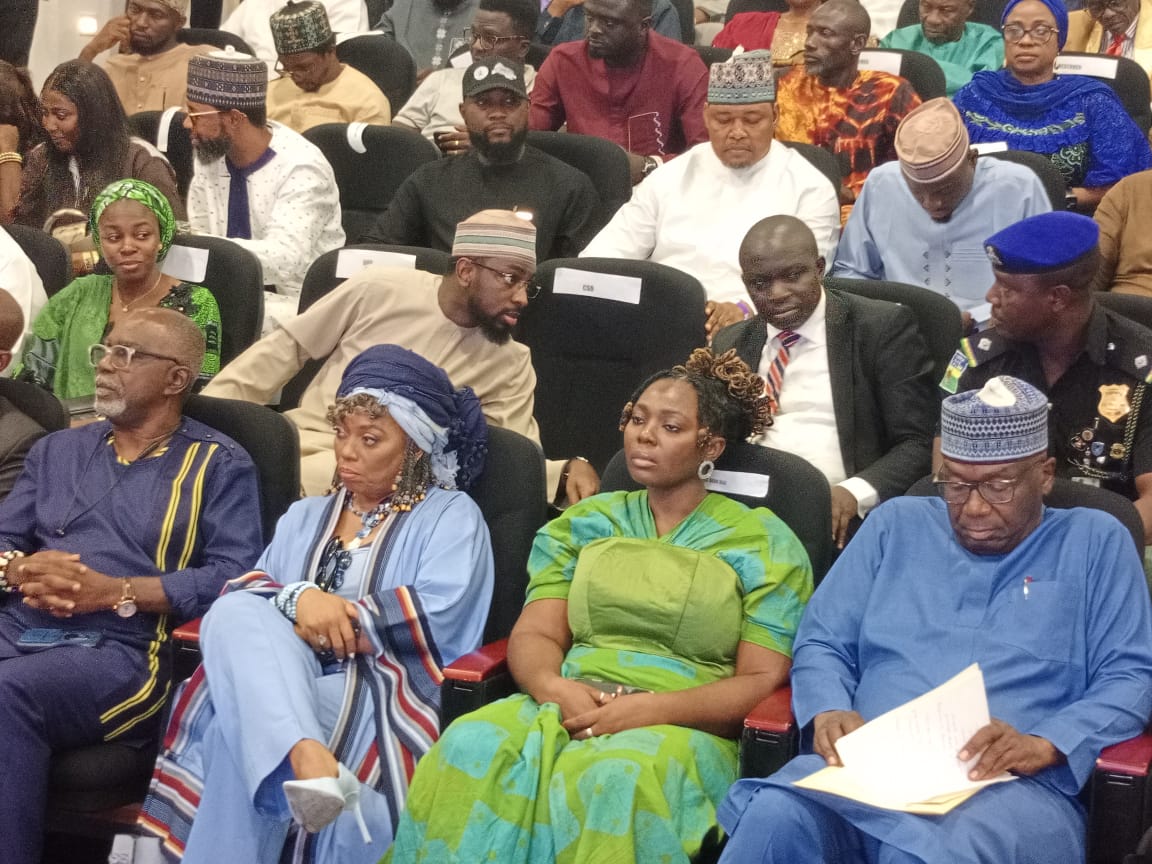
The exhibition, titled Fela Anikulapo-Kuti: A Retrospective, was opened by Governor AbdulRahman AbdulRazaq at the Institute of Contemporary African Art and Film in Ilorin on Monday.
The Governor said the establishment of the institute reflected his administration’s belief that development should extend beyond physical infrastructure to include spaces that promote creativity, knowledge and economic opportunities.
“When we established the Institute of Contemporary African Art & Film, our vision was clear: development must go beyond roads, bridges and buildings to create spaces for creativity, knowledge and opportunity,” AbdulRazaq said.
According to him, cultural infrastructure plays an important role in connecting people to their history, broadening their imagination and encouraging critical thinking.
“Physical infrastructure connects places; cultural infrastructure connects people to their history, expands their imagination and challenges their thinking,” the Governor said.
AbdulRazaq said the institute was established to preserve African stories, nurture talents and showcase the continent’s artists and thinkers to the world,
describing the decision to open the institution with an exhibition dedicated to Fela as significant, given the musician’s contribution to African music, social commentary and cultural expression.
“Fela was more than a musician. Through his music and artistic expression, he challenged conventions and confronted society with questions about power, freedom, identity and justice,” he added.
The Governor added that the late musician’s life demonstrated the capacity of artistic expression to influence public discourse and inspire social change.
The exhibition, curated by June Creative Art Advisory, led by its founder, Mrs Seun Alli, featured photography, archival materials, film, graphic works and other artistic expressions exploring Fela’s life, times and enduring influence.
AbdulRazaq commended the firm for bringing its curatorial expertise and creative vision to the project, while describing the exhibition as an opportunity for different categories of visitors to engage with the musician’s legacy.
He said the exhibition would provide students with learning opportunities beyond the classroom, inspire artists, support researchers and encourage young people to explore the creative industry.
“For students, this is a classroom beyond the classroom; for artists, inspiration; for researchers, an opportunity for deeper inquiry; and for young people, a reminder that creativity offers both self-expression and economic opportunity,” he said.
The Governor clarified that the state government was not claiming ownership of Fela’s story but was providing a platform for younger generations to encounter and learn from his legacy, adding that the state government is optimistic that the institute would promote cultural education, encourage creative enterprise, attract visitors and strengthen Kwara State’s position in Nigeria’s cultural and creative landscape.
According to him, the institution’s success would be measured by the talents it nurtured, the ideas it inspired and the opportunities it created.
“Governments change, but institutions should endure,” the Governor said, expressing the hope that the exhibition would mark the beginning of sustained cultural engagement at the institute.
“May this exhibition begin sustained cultural engagement at ICAAF and inspire our young people to create, question, discover and contribute to society,” he said.
AbdulRazaq added that the initiative reflected his administration’s commitment to building a state where cultural heritage, innovation and economic opportunities complemented one another.
In her address, the Commissioner for Communications, Hon. Bolanle Olukoju, said: “Today’s exhibition offers us an opportunity to revisit the life and works of Fela
Anikulapo-Kuti and appreciate how his music, ideas and artistic expression continue to influence generations.
“For the Ministry of Communications, this occasion speaks to an important part of our
mandate: promoting the stories, talents and creative expressions that shape our identity as a people.”
The Commissioner particularly noted that under Governor AbdulRazaq’s leadership, the State is creating opportunities for young people through investments in sectors such as film, fashion and technology.
She added: “Projects including
the Sugar Film Factory, the Garment Factory and the Ilorin Innovation Hub reflect the administration’s commitment to developing talent and supporting enterprise.
“The Institute of Contemporary African Art & Film, formerly the Ilorin Visual Arts Centre, adds an important dimension to this effort. It provides a platform for artistic expression, cultural learning and creative collaboration.
“We want young Kwarans who are passionate about painting, photography, filmmaking, fashion and design to see ICAAF as a place where they can explore their interests, learn from others and showcase their talents.
“We also encourage students to engage with art and history beyond the classroom. Fela’s story is a fitting subject for this exhibition. It demonstrates how creativity
can go beyond entertainment to shape cultural identity and influence public conversations. There is much for our young people to learn from his artistic journey and enduring impact.
“It might also interest you that kwara state was also part of Fela’s creative showcase during his lifetime.”
•••Says Ward stands with APC
Stephen Olufemi Oni, Ilorin
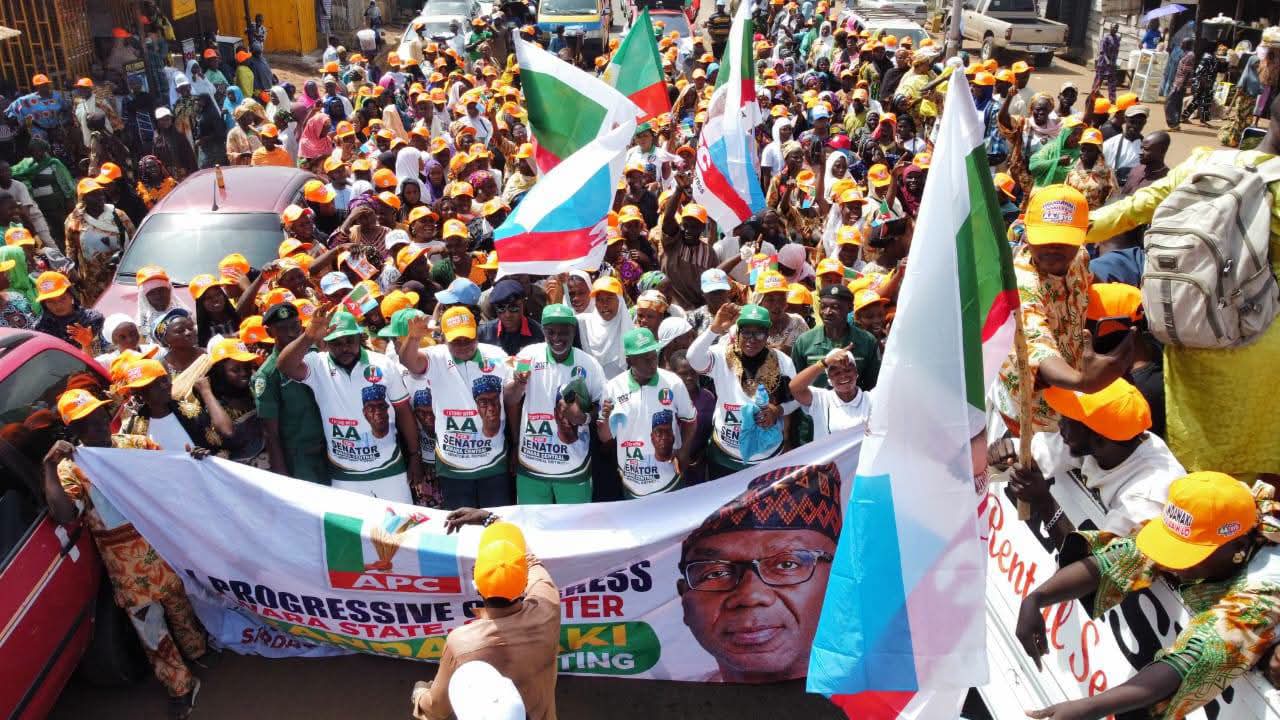
The Executive Chairman of the Ilorin West Local Government, Mallam Shehu AbdulRahman Babatunde Ladan, has led an All Progressives Congress (APC) mega rally in Ubandawaki Ward, reaffirming the commitment of party members and supporters to the APC ahead of the 2027 general elections.
The rally attracted party leaders, grassroots mobilisers, youths, women, and other stakeholders who gathered to demonstrate their support for the party.
Addressing the gathering, Chairman Ladan declared that Ubandawaki Ward remains committed to the APC and its political leadership, expressing support for President Bola Ahmed Tinubu’s Renewed Hope Agenda, Kwara State Governor AbdulRahman AbdulRazaq, and the APC governorship candidate, Rt. Hon. Engr. Yakubu Danladi-Salihu (SYD), alongside other party candidates for the 2027 general elections.
The Chairman emphasised the importance of unity, peaceful political engagement, and sustained grassroots mobilisation in strengthening the party’s structure ahead of the forthcoming elections, urging party faithful to remain united, engage constructively with residents, and work collectively towards the party’s political objectives.
Ladan also acknowledged the importance of Ubandawaki Ward in the political landscape of Ilorin West, encouraging party leaders and supporters to maintain cordial relationships, promote inclusive participation, and sustain engagement with the electorate. He stressed that a united party structure would help strengthen internal cooperation and effective grassroots coordination.
The mega rally renewed calls for unity, loyalty, and peaceful political participation among APC members and supporters, underscoring commitment by participants to mobilising support for the party’s candidates ahead of the 2027 general elections, while promoting peace, development, and responsible democratic engagement across Ilorin West Local Government Area.

- Mgt Accuses Union Of Dishing Out False Staff Remuneration Scale
Stephen Olufemi Oni, Ilorin
The staff of the Kwara State Internal Revenue Service (KWIRS) have lamented poor welfare conditions, rising living costs and stagnant salaries they have been subjected to, despite their contributions to the state’s revenue generation.
In a statement issued by the KWIRS chapter of the Association of Senior Civil Servants of Nigeria (ASCSN), the workers lamented that their sacrifice and professionalism, which have helped to place Kwara State among the more self-reliant states in the country, have not been matched with corresponding improvement in their welfare.
The workers questioned the disparity between their contributions to the state’s revenue and their welfare, saying many of them are battling financial hardship.
“We block leakages. We are posted to hospitals and other MDAs to secure government revenue. We work under pressure day and night but we continue to struggle to meet basic needs due to poor salaries.”
The association further expressed concern that personnel costs had remained unchanged for years while other expenditure heads had continued to increase.
It also cited a salary negotiation agreement dated October 11, 2022, which reportedly stated that the adjustment would be implemented “as soon as it can be accommodated in the budget.”
According to the workers, nearly four years after the agreement, there had been no implementation or clear indication of when the adjustment would take effect, despite the rising cost of living.
The staff said expenses on school fees, house rent, transportation and food had increased significantly while their salaries remained unchanged. “We smile outside but the majority of us are bleeding inside. We cannot continue to generate wealth for the state while we wallow in abject poverty,” they declared.
Urging their colleagues to remain united and resolute in pursuing improved welfare, the association said the workers should not expect better conditions without collectively standing up for their interests.
It called on members to remain calm, vigilant and prayerful as a 14-day period beginning October 15, 2026, counts down, without specifying further details in the statement about the expected action at its conclusion.
Reacting to the KW-IRS staff allegations, the Management, while
reaffirm its commitment to professionalism, political neutrality and its statutory mandate, expressed dismay over public speculation on staff remuneration and attempts to politicise unverified internal administrative communications.
“Management is concerned by attempts to exploit unverified internal administrative communications for political purposes, create unnecessary tension and distract the Service from its responsibilities. KWIRS will not be distracted from its mandate by such narratives,” said the Management.
It added: “The isolated salary figures being circulated on social media do not represent the full remuneration structure or total emoluments of KWIRS staff. Staff compensation extends beyond regular monthly salaries and includes the following benefits, in accordance with applicable policies and approved arrangements:
“Annual and Performance-Related Bonuses: Annual, festive, and situational bonuses linked to revenue performance milestones and staff performance and situational economic palliatives are paid periodically to staff members
“Annual Leave Allowance: A separate annual payment in addition to regular monthly remuneration.
Staff Welfare and Operational Support: Structured measures designed to support staff welfare and professional development throughout their careers.
“Accordingly, assessing staff remuneration solely on selectively circulated salary figures presents an incomplete picture of the Service’s compensation and welfare structure.
“Management remains committed to staff welfare, motivation and professional development. The Service will continue to strengthen policies and operational processes that support staff well-being and performance, within government-approved resource allocations and applicable administrative frameworks. The Service remains one of the Government Institutions with the most recruitment requests and this is a testament of Management’s commitment to staff welfare.
“KWIRS urges members of the public, taxpayers and other stakeholders to disregard unverified and misleading narratives, verify information before sharing it, and rely on official Service communications for accurate information about its operations and staff policies.
“All stakeholders are encouraged to refrain from politicising internal administrative matters or spreading claims capable of undermining institutional harmony and public confidence.
“KWIRS remains focused on its statutory responsibilities and committed to mobilising revenue for the economic growth and sustainable development of Kwara State.”

WHO: Nigeria Records Zero Ebola Cases After Evacuation of Swiss Couple

Kwara celebrates Fela’s legacy with retrospective exhibition

2027: Ilorin West LG Boss Leads APC Mega Rally In Ubandawaki

-
 Uncategorized6 years ago
FG, states urged to harness flooding for ranching, others with technology – Agbaje
-
 Headlines11 years ago
Breaking: EFCC seals Borno House of Assembly, as Hon members take to their heels
-
 News12 years ago
Nigeria Security Operatives Stage Manhunt For Homosexual Perpetrator
-
 News10 years ago
How 21-year-old Girl fled community over accusation of lesbianism
-
 News11 years ago
Yobe Gov Moves Against Deputy
-
 Opinion7 years ago
7 signs she has friend zoned you
-
Technology5 years ago
Online job placement company headhunts women
-
 Headlines10 years ago
Borno Dep Gov Abducts Another Church Leader