Connect with us

Economy

UNIDO, FG, Japan to implement project for job opportunities

Published

on

UNIDO, FG, Japan to implement project for job opportunities

Stakeholders at Circular Economy Practices for Plastic Value Chains project

Stakeholders at Circular Economy Practices for Plastic Value Chains project

By Vvian Emoni

The United Nations Industrial Development Organisation (UNIDO), the Federal Government of Nigeria and Japanese government have expressed commitment to implement a project to create job opportunities.

The News Agency of Nigeria (NAN) reports that the project is also aimed at protecting the environment.

The Regional Director of UNIDO, Nigeria, Mr Jean Bakole said this at a Stakeholders’ Awareness on Circular Economy Practices for Plastic Value Chains project in Abuja on Tuesday

Bakole said that UNIDO would be providing necessary support to Nigeria to effectively implement multilateral environmental agreement, including adopting cleaner production policies and methodologies to create job opportunities.

He said that the effort would be achieved through the development and implementation of regulatory frameworks, strengthening national institutional capabilities for eco-balanced and promoting resources use efficiency and green industries in manufacturing production.

According to him, it is on that context that the project is being developed to promote sustainable management technologies, identify new business models and accelerate capacity-building process.

“The project also creates awareness-raising on sustainable plastic value chains through circular economy approach in Nigeria.

“At the same time, this circular economy approach will contribute to protecting the environment from hazardous wastes and will help to generate decent jobs,” he said.

Bakole said that the meeting was focused on development of guidelines on plastic wastes management policy under UNIDO`s Project on “Promoting sustainable plastic value chains through circular economy practices.”

He said that plastics waste continues to be a major environmental and social problem in many countries.

According to him, to manage the problem has become a major topic for innovators, policy makers, researchers, business owners and even specific sectors like the agricultural, marine and tourism sectors.

“Though plastics waste management is gradually beginning to gain prominence, the manufacturing and usage of new plastics is still at an exponential rate.”

He also said that the project implementation model promotes cooperation between the federal and state governments including the FCT, and the organised private sector with the technical support of UNIDO.

“In response to the environmental challenges in Nigeria, UNIDO’s ongoing formulation of the Programme for Country Partnerships (PCP) is making provision to focus on environment management component.

“Through this component, UNIDO will provide necessary support to Nigeria to effectively implement the project,” he said.

The Ambassador Extraordinary and Plenipotentiary Permanent Representative to ECOWAS, Amb. Matsunaga Kazuyoshi, said the essence of the meeting was to discuss how to develop a guideline on the policy with various stakeholders.

Kazu Yoshi of the Embassy of Japan to Nigeria, said the partnership with UNIDO and Nigeria would strongly support in the implementation of the project, as it would create job opportunities in the country.

He said that the Japanese government was committed to collaborating with the Nigerian government and UNIDO, adding that the country had developed a recycling culture on how to manage waste effectively.

“The concern and challenges of Nigeria is our concern and our challenges as well, no single country or organisation can tackle the issue of waste management, accept when we work together.

“Therefore, it is important to have various stakeholders to work on this issue. So that this three years project which will be ending in 2025 can be effectively implemented to enable it achieve its goal,” he said.

The Project Manager of UNIDO, Ms Nishio Nahomi, said that the meeting would help the government to come up with a guideline that would support it in promoting waste management in the country.

Nahomi said that about 52.5 million dollars had been provided in the execution of the project, adding that the collaboration of various stakeholders would go a long way in the implementation of the project.

She called on stakeholders to support UNIDO, the Federal Government and Japan government in the execution of the project, adding that the effort would help to reduce waste pollution and create job opportunities in the country.

The Minister of Environment, Mr Mohammed Abdullahi said that plastic waste had become an integral part of the society due to its wide range of uses and economic benefits.

Abdullahi said that the volume of plastic waste being generated in the country presents circular economic business opportunities across the plastic value chain which should be properly harnessed for job creation.

He said that the government of japan funded a study on available sustainable alternative materials for plastic innovative packaging and recycling technologies that market needed in Africa to reduce plastic leakages to the environment.

He said the study showed a very low level of recycling activities in the country and only 45 per cent of wastes were collected.

“About 80 per cent of plastic waste goes to dumpsite while only 10 per cent is recycled, alternative material to plastic are yet to be introduced in the market and recognition of bioplastics are low.

“It is because of these challenges that the project on promoting sustainable plastic value chain through circular economy practices to be piloted in Lagos and Abuja was developed to address these gaps and its being implementing by UNIDO,” he said.

The minister was represented by Mr Charles Ikeah, the Director overseeing the Office of the Permanent Secretary of the ministry

Continue Reading
Click to comment

Leave a Reply

Your email address will not be published. Required fields are marked *

Economy

JUST IN: FG Halts Planned 15% Import Duty on Petrol, Diesel

Published

on

By: Fabian Apechihin

The Federal Government has suspended the planned implementation of a 15 percent import duty on petrol and diesel.

This was disclosed on Thursday by George Ene-Ita, Director of Public Affairs at the Nigerian Midstream and Downstream Petroleum Regulatory Authority (NMDPRA), who urged Nigerians to avoid panic buying.

President Bola Tinubu had earlier, on October 29, approved the imposition of the tariff following a proposal by the Executive Chairman of the Federal Inland Revenue Service (FIRS), Zacch Adedeji. The approval, conveyed in a letter signed by the President’s Private Secretary, Damilotun Aderemi, was intended to take effect from November 21, 2025.

The proposed policy sought to impose a 15 percent duty on the cost, insurance, and freight (CIF) value of imported petrol and diesel. It was aimed at supporting domestic refineries — such as the Dangote Refinery and modular plants — by making imported fuel less competitive. However, experts cautioned that the move could lead to an increase of up to ₦150 per litre in pump prices and further fuel inflation and transportation costs.

In its latest update, the NMDPRA confirmed that the import duty is no longer under consideration.

“It should also be noted that the implementation of the 15% ad-valorem import duty on imported Premium Motor Spirit (PMS) and Automotive Gas Oil (Diesel) is no longer in view,” the Authority stated.

The agency further assured the public of adequate fuel availability across the country, noting that national stock levels remain within the required sufficiency threshold.

“There is a robust domestic supply of petroleum products — including PMS, AGO, and LPG — from both local refineries and imports, ensuring timely replenishment of depots and retail stations,” the statement added.

NMDPRA cautioned marketers against hoarding, panic buying, or arbitrary price increases, emphasizing that it will continue to monitor the market to prevent any disruption in supply.

“While appreciating the efforts of stakeholders in maintaining smooth and uninterrupted supply, the public is assured of NMDPRA’s commitment to safeguarding national energy security,” the statement concluded.

Continue Reading

Economy

FGN, Sign $400m Deal To Boost Local Steel Production

Published

on

From Hassan Taiye

The Federal Government of Nigeria, FGN, through the Ministry of Steel Development, has signed a Joint Strategic Cooperation Declaration with Stellar Steel Company Limited.

Stellar Steel Company Limited is a steel-manufacturing enterprise established to operate in Nigeria, with major investment backing from Chinese parent groups: Galaxy Group and RSIN Group based in Fuzhou, Fujian Province, China.

The company has committed approximately US$450 million for a steel plant project in Ogun State, Nigeria, scheduled to begin operations by mid-2026.

This landmark partnership is aimed at revitalising Nigeria’s steel industry and reducing the nation’s dependence on imported steel products, according to a statement signed by the the Principal Information Officer, PIO, Ijomah Opia, for the director, Information and Public Relations in the ministry.

The agreement, signed in Abuja, on Tuesday 28th October, 2025 will see Stellar Steel invest $400 million in the construction of a modern Steel Plant in Ewekoro, Ogun State. The project will be developed in three phases, with the first phase expected to begin production by 2026.

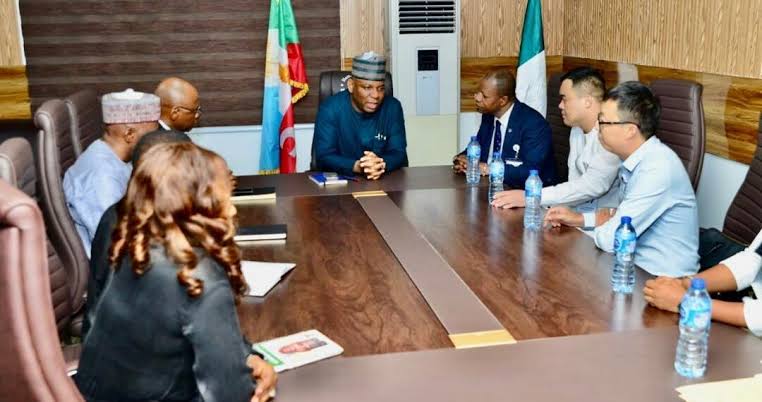
The Minister of Steel Development Prince Shuaibu Abubakar Audu signed the agreement when he hosted Mr Li, President of Inner Galaxy Group and other members of the Stellar Steel Company Limited in the Ministry’s Headquarters in Abuja.

According to Prince Audu, the collaboration aligns with the federal government’s goal of achieving 10 million tonnes of crude steel production per annum by 2030, a major step toward industrial self-reliance and economic diversification.

The minister further stated that the Federal Ministry of Steel Development would facilitate policy and infrastructure support, including inclusion of Stellar Steel’s logistics projects in the National Infrastructure Plan and access to available fiscal incentives.

Highlights of the cooperation includes the followings:

1.Development of a localised iron ore supply chain to reduce import dependence and save over $1 billion in foreign exchange annually.

  1. Creation of more than 2,000 direct and 20,000 indirect jobs across the steel value chain.
  2. Promotion of green steel production using clean and energy-efficient technologies.
  3. Strengthening of Nigeria’s position as a regional steel manufacturing hub in West Africa.

Audi also said that in return, Stellar Steel would prioritise local recruitment and training, partnering with Nigerian universities to build technical and managerial expertise in steel production.

Prince Shuaibu emphasised that this strategic cooperation marks a new era for Nigeria’s steel industry and demonstrates the government’s commitment to sustainable industrial growth and economic transformation.

In his remarks the leader of the delegation, Mr Li assured the minister that Stellar Steel would respect all agreements reached and would ensure the completion of the project in record time and assured that all safety standards will be observed.

Mr Li was accompanied during the visit by Mr You Xiastian, Vice Chairman of RSIN Group, Mr Jackie Den, Vice President of Inner Galaxy Group and Mr Yin, Director of RSIN Group.

He recalled that the Minister of Steel Development, Prince Audu, performed the groundbreaking ceremony of the Steel Plant in Ogun State sometime in April, 2025.

Speaking at the signing, representatives of both parties emphasised that the partnership would strengthen Nigeria’s industrial base, create jobs, and foster technology transfer in the sector.

Continue Reading

Economy

EU Delegation Strengthens Ties with Nigerian Senate

Published

on

From Hassan Taiye

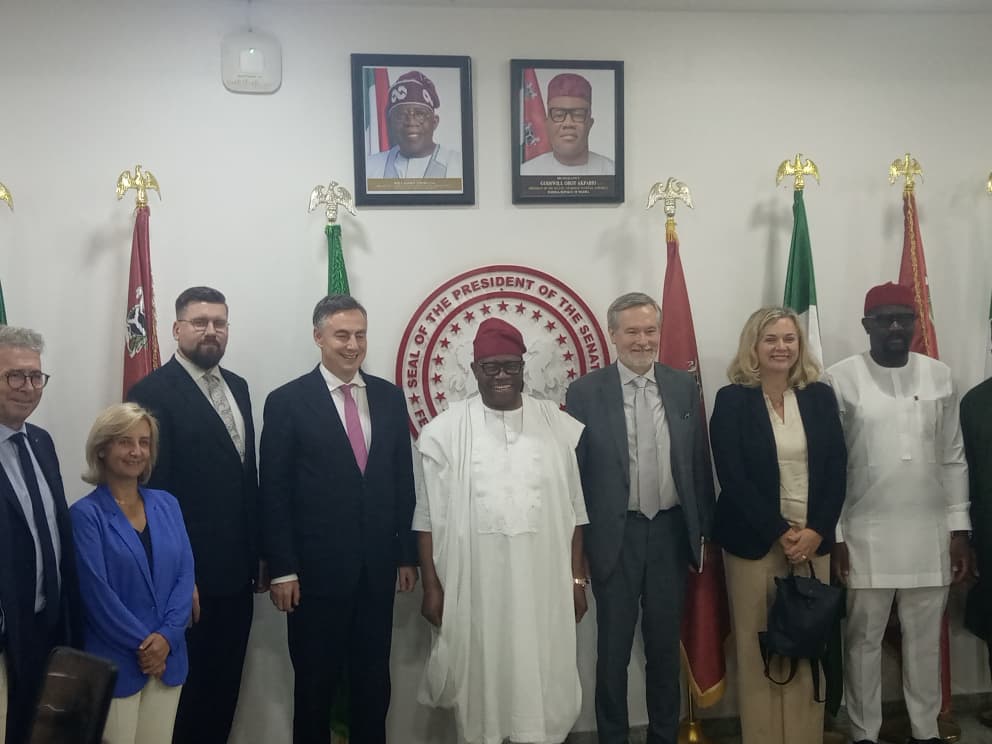
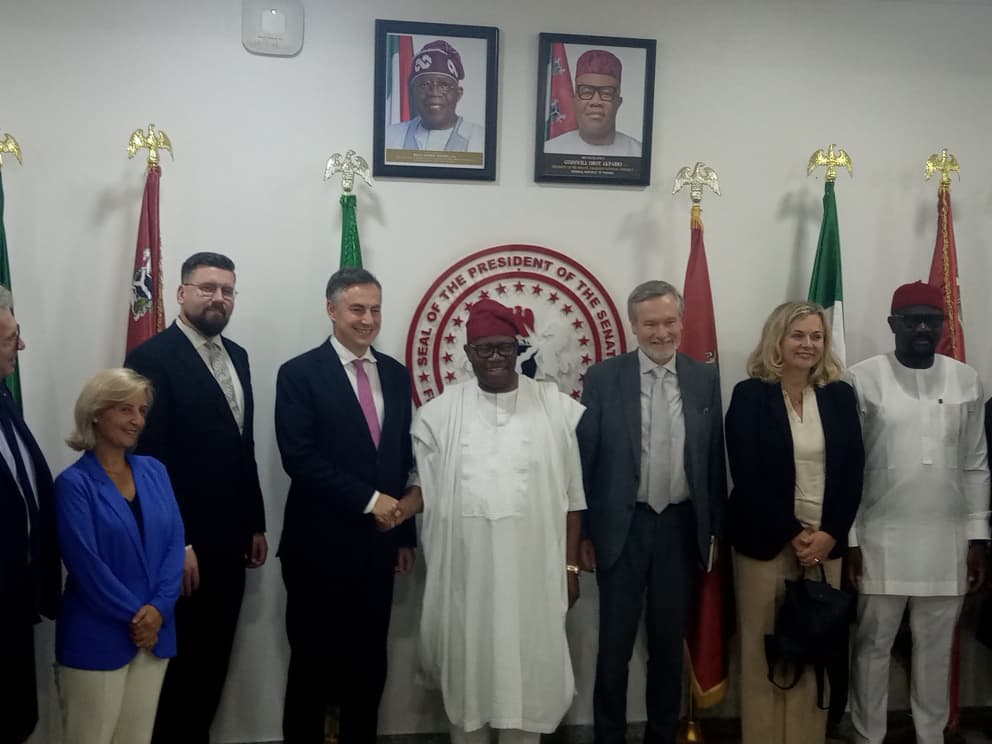
A high-level delegation from the European Union (EU) Parliament’s Foreign Affairs Committee, led by Mr. David McAllister, paid a courtesy visit to the Nigerian Senate today October 28, 2025.

“We are here to deepen our understanding of the situation in West Africa and strengthen our partnership with Nigeria,” McAllister said.

Senate President Godswill Akpabio welcomed the delegation, emphasizing Nigeria’s strategic partnership with the EU. “Nigeria is committed to strengthening ties with the EU, highlighting areas of mutual interest, including security, trade, and governance,” Akpabio said.

The delegation, comprising Ambassador Greta Mylott, EU Ambassador to Nigeria and ECOWAS, Miss Zelaya Zorko, Miss Mata Tamido, Sebastian Tankman, General Christophe Gomart, and Sebastian Buharo, is undertaking a comprehensive tour of West Africa, with stops in Nigeria and Ghana.

During the visit, Akpabio shed light on the challenges facing female representation in Nigeria’s parliament. “Women often vote for male candidates, making it difficult for female candidates to win elections,” he noted.

“The Senate is exploring innovative solutions, including constitutional amendments, to boost female participation in the legislative process, with support from organizations like the Black Women’s Forum.”

The EU delegation’s visit aims to foster greater understanding and cooperation between the EU and Nigeria, addressing shared concerns, such as terrorism, climate change, and economic development.

“The EU is committed to supporting Nigeria’s development efforts,” McAllister assured the Senate, emphasizing the bloc’s interest in seeing a stable, prosperous, and democratic Nigeria.

Their visit also includes participation in the forthcoming International Islamic Conference on Security and Governance in West Africa and the Sahel, scheduled for November 4-6, 2025 at ECOWAS Commission.

Akpabio expressed optimism about the potential for enhanced cooperation, highlighting Nigeria’s readiness to work with the EU to address common challenges.

Continue Reading

Trending

Copyright © 2017 Zox News Theme. Theme by MVP Themes, powered by WordPress.