Connect with us

News

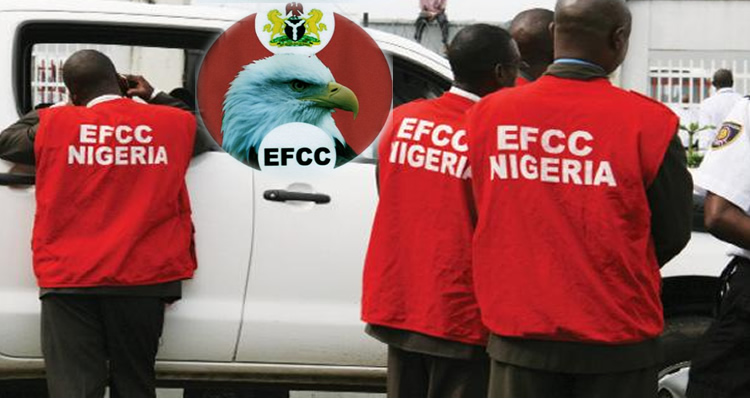
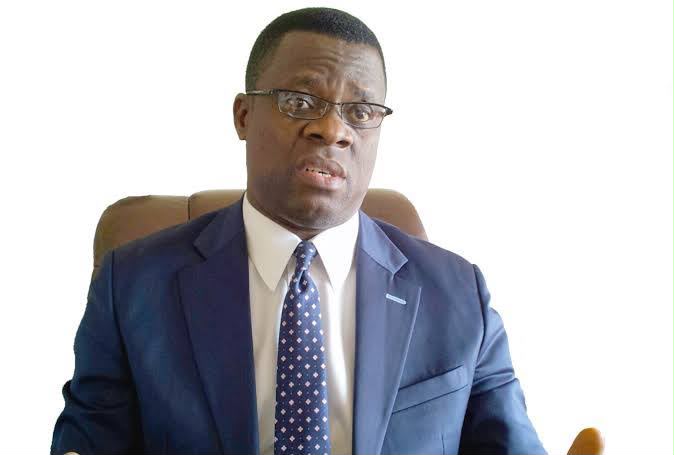
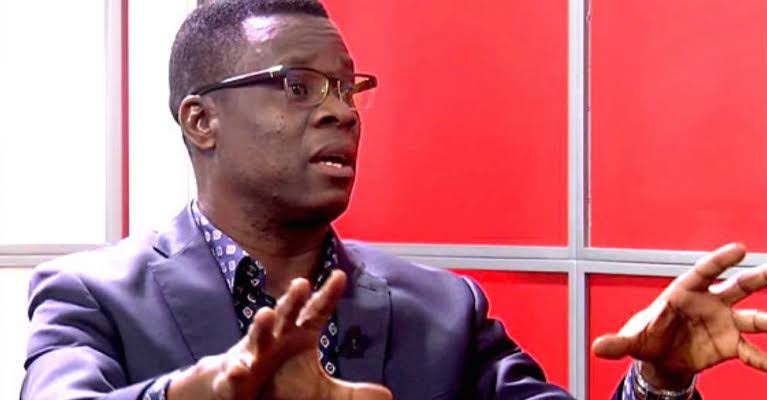
Why the persecution of Obla, SAN by EFCC can’t Stand 

Published

on

To be precise, on 28 November 2016, Chief Godwin Obla (SAN), a former prosecutor with the Economic and Financial Crimes Commission (EFCC), was arraigned before a Lagos High Court in Suit No: LD/3671C/16 alongside the  Justice Rita Ofili-Ajumogobia, then a Judge of the Federal High Court, on the allegation that he bribed the latter with the sum of N5 million to secure the conviction of the Defendant in Charge No.:FHC/L/C/482C/10 between the Federal Republic of Nigeria v. Raymond TemisanOmatseye.
Interestingly, the case of FRN V Omatseye was a criminal prosecution in respect of which the EFCC itself had briefed Obla and provided the proof of evidence, witnesses and other information utilized by Oblain the course of the trial.
This trial commenced in February 2011 before  Justice Binta Nyako until 2013 when Obla filed an amended Charge and the Defendant was consequently rearraigned before  Justice Ajumogobia.
The entire trial spanned the course of 5 years i.e. between the first arraignment in 2011 and 20 May 2016 whenthe judgment convicting the Defendant for sundry breaches of the Public Procurement Act was delivered.
In this 5 -year period, Obla appeared before the Court on at least 46 occasions along with junior Counsel on behalf on the EFCC.
It is on record that Omatseye’s conviction was very significant in the fight against corruption and was widely celebrated as the first conviction ever secured by the EFCC for breach of contract approval thresholds under the Public Procurement Act.
 One factor which lends credence to this assertion was the wide celebration by the EFCC of this conviction/Judgment. For instance, the EFCC in its Press Release dated 20th May 2016(which continues to appear on its website www.efccnigeria.org)had the following to say about the Judgment:
“After five years of grueling legal battle, justice is finally served as a Federal High Court sitting in Lagos today convicted a former Director General of the Nigeria Maritime Administration and Safety Agency, NIMASA, Mr. TemisanOmatseye.
Justice Rita Ofili- Ajumogobia in a landmark ruling convicted the former DG on 25 of the 27-count charge bordering on alleged contract variation, bid rigging and awarding contract above his approval limit which violates the provisions of the Public Procurement Act, brought against him by the Economic and Financial Crimes Commission, EFCC.”
Again, on May 27 2016, the Acting Chairman of the EFCC, whilst speaking at the launch of the “Clean Hands Against Corruption Campaign” at the Eagle Square in Abuja alluded to the conviction of Raymond Omatseye as one of the “140 convictions the Economic and Financial Crimes Commission (EFCC) has secured in six months.”
It is perhaps curious that the same EFCC which lauded the conviction of Raymond Omatseye at several fora, made a complete volte-face to allege that the conviction was secured as a result of “perversion of justice”, moresoas no indication has been given as to whatever motivation Obla might have had to pay a bribe to secure a conviction on a case investigated by the EFCC and for which the EFCC itself provided the witnesses and proof of evidence.  By alleging that Obla attempted to “pervert the course of justice” in the case of FEDERAL REPUBLIC OF NIGERIA v. OMATSEYE, one wonders whether the EFCC was contending that the accused person in that case- who was investigated by the EFCC itself, ought not to have been tried at all, much less convicted and instead ought to have been discharged and acquitted.
In addition to the Omatseye trial,at several times between 2008 and 2015, Obla was engaged by the EFCC to prosecute and/or defend a number of cases at various courts against persons alleged to have been involved in economic and financial crimes or in respect of which the EFCC had been sued.
By virtue of the various instructions of the EFCC to Obla for these various cases, Obla led the prosecution of over 40 cases and spearheaded the recovery of various properties and assets (including cash and shares in Banks and other companies) for the benefit of the EFCC and the Federal Government of Nigeria. All of these forfeited properties/monies were duly handed over to the EFCC.
Despite these sterling achievements as a prosecutor, the EFCC consistently failed to pay Obla’s professional fees and to reimburse him for out-of-pocket expenses incurred by him in the course of representing the EFCC in all those cases. All demands by Obla for payment of the said fees and expenses as well as all the reminders issued in their regard were ignored by the EFCC.
Despite the EFCC’s treatment of Obla’s request for fees, to ensure the unimpeded prosecution of these cases, many of which were at crucial and delicate stages of trial, Obla, on behalf and with the full knowledge of the EFCC, continued to incur out-of-pocket expenses to cover filing fees, transport costs for himself and junior colleagues (including flight tickets to attend matters outside jurisdiction), clerical and secretarial costs, accommodation, telephone services, appearances costs etc., all of which culminated in several judgments/rulings/orders in favour of the EFCC and the forfeiture of significant assets and properties (real and monetary).
Notwithstandingits persistent failure to pay Obla’s fees, the EFCC, by a letter dated 14thMarch 2016 purported to disengage Obla from providing legal services to the Commission. In response to the EFCC’s letter, Obla wrote a letter to the EFCC dated14th April 2016 by which he issued a reminder on the long overdue fees and expenses owed to him. It was in the course of this exchange on the issue of fees that the EFCC, perhaps motivated by a desire to avoid the payment of its debts to Obla, filed a criminal charge against Obla and  Justice Ajumogobia before the High Court of Lagos State in SUIT NO: LD/3671C/16, alleging that Obla bribed Justice Ajumogobia to ‘procure’ the conviction ofOmatseye in the EFCC case of FRN V OMATSEYE (Charge No.: FHC/L/C/482C/1.
Obla has since filed a suit against the EFCC before the High Court of the Federal Capital Territory in Suit No: CV/3220/17 claimingthe sum of N 685,389,928.10 (Six Hundred and Eighty-Five Million, Three Hundred and Eighty-Nine Thousand, Nine Hundred and Twenty-Eight Naira and 10 Kobo) and $ 202,460.47 (Two Hundred and Two Thousand, Four Hundred and Sixty Dollars and Forty-Seven Cents) as fees and expenses owed to him by the EFCC.
This suit was initially before the  Justice Valentine Ashi(of blessed memory), and in the course of the trial the parties had led their evidence and filed their final addresses.
It was while waiting for a date for the adoption of the respective final addresses that news filtered in of the unfortunate demise of the presiding Judge.
The case has recently started de novo before the Justice Adeniyi of the High Court of the FCT.
On 28 November 2016, Justice Rita Ofili-Ajumogobia and Godwin Obla (SAN) were arraigned before Justice Hakeem Oshodi of the Lagos State High Court, Ikejaon a 30-count Information dated November 17, 2016- Suit No: LD/3671C/16.The Information was subsequently substituted with a 31-Count Amended Information dated21st February 2018.
Obla was only affected by Counts 1-4 of the information where he was charged with the following:
Conspiracy to pervert the course of justice contrary to section 97(1) of the Criminal Law of Lagos State, No. 11, 2011.
That you HON. JUSTICE RITA NGOZI OFILI AJUMOGOBIA AND GODWIN OBLA (SAN) on or about the 21st day of May, 2015 in Lagos within the jurisdiction of this Honourable Court, conspired with one another to pervert the course of justice in Charge No. FHC/L/C/482C/10 with the sum of N 5,000,000.00 (Five Million Naira).
Attempt to pervert the course of justice contrary to section 97 (1) of the Criminal Law of Lagos State, No. 11, 2011
That you HON. JUSTICE RITA NGOZI OFILI AJUMOGOBIA AND GODWIN OBLA (SAN) on or about the 21st of May 2015 in Lagos within the jurisdiction of this Honourable Court, attempted to pervert the course of justice in Charge No. FHC/L/C/482C/10 with the sum of N 5,000,000.00 (Five Million Naira)
Offering gratification to a public official contrary to section 64 (1) of the Criminal Law of Lagos State, No. 11, 2011
That you GODWIN OBLA (SAN) on or about the 21st day of May, 2015 in Lagos within the jurisdiction of this Honourable Court intentionally gave the sum of N 5,000,000.00 (Five Million Naira only) to Hon. Justice RITA NGOZI OFILI AJUMOGOBIA of the Federal High Court directly from your Obla and Company’s account No. 1015319084 domiciled in the United Bank for Africa Plc, in order that the said Judge acts in the exercise of her official duties.
Offering gratification to a public official contrary to section 64 (1) of the Criminal Law of Lagos State, No. 11, 2011.
That you GODWIN OBLA (SAN) on or about the 21st day of May, 2015 in Lagos within the jurisdiction of this Honourable Court, intentionally gave the sum of N 5,000,000.00 (Five Million Naira only) to Hon. Justice RITA NGOZI OFILI AJUMOGOBIA of the Federal High Court directly from your Obla and Company’s account No. 1015319084 domiciled in the United Bank for Africa Plc, in order that the said Judge refrains from acting in the exercise of her official duties.”
The trial before the Lagos State High Court spanned more than two (2) years and came up on more than 22 separate dates between28th November 2018 and 16th April 2019 as follows: 28thNovember 2016, 8thDecember 2016, 9thJanuary 2017, 30thJanuary 2017,10thMarch 2017, 17thMarch 2017, 28th April 2017, 26thMay 2017, 1stJune 2017, 6thJuly 2018,  29thSeptember 2017, 10thNovember 2017, 26thJanuary 2018, 23rdFebruary 2018, 23rdMarch 2018, 20thApril 2018, 25thMay 2018, 8thJune 2018, 14thSeptember 2018, 2ndNovember 2018, 14thDecember 2018, 25thJanuary 2019 and 16thApril 2019.
At the Lagos High Court, the EFCC called 14 witnesses and eventually closed its case on14th September 2018.
In the course of its presentation of its case, the EFCC demonstrated that whereas the Charge against Obla was for the payment of N 5 millionfrom his UBA Account, allegedly to Justice Ajumogobia to pervert the course of justice, the evidence before the Court was that no payment was made by Obla into any of her personal accounts. Instead, the payment of the N 5 million in contention was to a registered company – Nigel &Colive Ltd- whose directors did not include Ajumogobia.
Other elements of the EFCC’s case included that no petition was filed against Obla alleging any wrongdoing on Obla’s part in connection with the Omatseye case; that the EFCC did not investigate Obla’s defence that the payment of the amount in question was for the purpose of obtaining building materials for his construction site; that the EFCC defended the Omatseye Judgment and vigorously  resisted the Appeal against his conviction; and that the EFCC’s conclusion that Obla paid a bribe was essentially not predicated on any hard facts.
Obla immediately responded to the closure of the prosecution’s case by filing a no case submission on the same date (14thSeptember 2018), seeking an order of acquittal on the ground that the prosecution had not made out a sufficient case to warrant a defence.
Notwithstanding the weighty submissions made in Obla’s no case submission, the EFCC never filed any reaction to it before the Court.
After Obla filed his no case submission and the EFCC failed/refused to file any response, Justice Ajumogobiafiled a motion challenging the jurisdiction of the Court on the ground that, being a judicial officer and by virtue of the judgment of the Court of Appeal in the case of NGANJIWA V FRN(delivered on 11th December 2017), the charge against her could not have been filed until after disciplinary action by the National Judicial Council had been taken against her. Surprisingly, the EFCC Counsel, Rotimi Oyedepo, who had conveniently failed to respond to Obla’s no case submission, immediately filed a counter affidavit conceding to Justice Ajumogobia’s objection and in fact urged the court to strike out the charge and discharge both Obla and Ajumogobia.
Obla’s Counsel (Chief I.A. Adedipe, SAN andChief F.O. Orbih, SAN)both argued that considering the stage of the proceedings, the EFCC’s failure/refusal to file any response to Obla’s no case submission ought to be interpreted as a concession to the fact that Obla was entitled to an order discharging and acquitting him on all the counts of the Amended Information related to him.
The Judge however opined that since the jurisdiction of the Court had been challenged, the only issue to consider was whether or not the Court had the jurisdiction to continue with the trial.
Consequently, after more than two years of trial, Justice H. Oshodi on 16th April 2019delivered a ruling striking out the charge before the Lagos High Court. The Court held that based on the judicial precedent set by the case of Nganjiwa V. FRN, the High Court lacked jurisdiction to hear the suit, as the EFCC “jumped the gun” in filing the Amended Information.
The Court, in its Ruling, seriously deprecated the conduct of both the EFCC and its Counsel, Rotimi Oyedepo and condemned its prosecution of the case in the following words:
                “Before concluding, the Court will want to make one or two comments.
As noted above, the Prosecution, as at Monday 11th December 2017 was aware, as a result of the decision of the Court of Appeal in HON. JUSTICE HYELADZIRA NGANJIWA V FEDERAL REPUBLIC OF NIGERIA (Supra) that the Court lacked jurisdiction to entertain the criminal action filed against the 1stDefendant. As at that day, the 1stAmended Information was yet to be filed. As at that day, the 12th (twelfth) witness for the Prosecution was still giving evidence. One would have thought that the Prosecution would have urged the Court to strike out the case as a consequence of the decision of the Court of Appeal. But no! the Prosecution still persisted, like a bull running amok, amended the Information and called 2 (two) further witnesses.
It ought to be pointed out for record purpose that a counsel is a minister in the temple of justice and as an officer of the Court, a counsel has a duty to assist the Court rather than mislead it. In other climes, where learned counsel that find themselves in such a position, as an officer of the court, will have brought a proper application to have the case abated. Why the Prosecution went on with proceedings when it is obvious that all what the Court was doing amounted to a nullity is best known to them. Precious judicial time had been wasted. Though the Court is aware of the provision of Section 285 (1) of the Administration of Criminal Justice Law 2015, which is against a Private Prosecutor, it is so unfortunate that in our judicial system, we have still not devised ways and means to condemn a Prosecuting Agency of the Government, be it State or Federal, in a  criminal action by the payment of heavy cost in situations as this instance, having in mind that a Defendant will have incurred cost in defending the charge, albeit a worthless charge.
It has to be restated that there is no doubt that a counsel is duty bound to present his clients’ case with utmost devotion. But such devotion must be coloured with professional discretion. In other words, counsel must be the master in the conduct of his client’s case and should not be dictated to by his client as to how to conduct the case. It is in recognition of that authority of counsel that Rules 14(c) and 18(a) of the Rules of Professional Conduct, published as Government Notice No. 69 in Federal Official Gazette No. 5 of 18th January 1980 which deals with how far a lawyer may go in supporting a client’s case and the right of the lawyer to control the incidents of the trial, makes it a provision of a law.
No fear of judicial disfavour of public unpopularity should restrain counsel from the full discharge of his duty. In the judicial forum the client is entitled to expect his lawyer to assert every such remedy or defence. It must however be borne in mind that the great trust of the lawyer is to be performed within and not without the bounds of the law…”
The ruling of the Lagos State High Court and the comments of the trial Judge raisea few interesting issues.
For instance, why did the prosecution deliberately refuse to notify the Lagos State High Court that the Court lacked jurisdiction as soon as it became aware of that fact? This is even more curious when it is considered that the EFCC was a party to the NGANJIWA case and that it was in fact the same prosecutor (Rotimi Oyedepo) that appeared for the Federal Republic of Nigeria in that case that prosecuted the case against Obla and Ajumogobia at the Lagos State High Court. Again, it is worth asking what the prosecution intended to achieve by calling more witnesses in the trial even after becoming aware that by the decision inNGANJIWA’S case the Court lacked the jurisdiction to try the case, only to subsequently concede to the court’s lack of jurisdiction several months after at the time it did.
It would seem from the observations made by  Justice Oshodi J. in his ruling, that the prosecution’s desire to proceed with a trial even when it was apparent that the court lacked jurisdiction smacked of an intent to persecute the defendants, and not to prosecute them within the bounds of the law.
On 16th April 2019- the same date the Lagos High Court delivered its judgment striking out the Information against Obla and Ajumogobia- Obla filed a notice of appeal (APPEAL NO: CA/LAG/CR/517/2019)challenging the decision of the Court to merely strike out the Information without acquitting him. This Notice of Appeal was subsequently replaced by one filed on 30thApril 2019.
This Appeal mainly seeks an Order of the Court of Appeal discharging and acquitting Obla on the relevant counts of the Information filed at the High Court of Lagos State, having regard to the EFCC’s failure to respond to his no case submission and its concession to the lack of jurisdiction at that stage. The prayers sought in the Appeal (which is currently before the Court of Appeal, Lagos Division) are as follows:
a.       “AN ORDER of the Court of Appeal allowing this appeal and setting aside the decision/Ruling of the High Court of Justice of Lagos State delivered on 16 April 2019.
b.       AN ORDER of the Court of Appealinvoking its jurisdiction under Section 15 of the Court of Appeal Act Cap. C36 LFN 2004 by assuming jurisdiction over the Appellant’s Application made on 25 January 2019and granting an order permitting the separate trial of the Appellant on Counts 1, 2, 3 and 4 of the 1st Amended Information dated 21 February 2018.
AND/OR ALTERNATIVELY
c.        AN ORDER of the Court of Appeal invoking its jurisdiction under Section 15 of the Court of Appeal Cap. C36 LFN 2004to hear and determine the Appellant’s no case submission dated14 September 2018.
d.       A CONSEQUENTIAL ORDERdischarging and acquitting the Appellant on Counts 1, 2, 3 and 4 as contained in the 1st Amended Information dated 21st February 2018.”
Obla’sAppellant’S Brief was filed on 8 May 2019 and it was served on the EFCC on the same day. Following the EFCC’s failure to file its Brief, Obla’s Counsel filed a Notice of Motion dated 8November 2019 (Motion No: CA/LAG/ROA/CA/128/M/2019) seeking an Order setting the Appeal down for hearing on the Appellant’s Brief alone. The Court of Appeal then fixed 17 October 2019 to hear the said application.
On 16 October 2019, just one day before the date fixed for the hearing of the motion, the EFCCfinally filed its Brief of Argument along with an application to regularize its position in the Appeal.Obla immediately filed his Reply Brief on 17 October 2019 and on the said date withdrew the application dated 8 November 2019.
The Appeal has now been fixed for hearing on 28th May 2020.
On 17th April 2019 – a day after the ruling of the Lagos State High Court striking out the charge and discharging the defendants- the EFCC re-arraigned the defendants before Justice R.  Aikawa of the Federal High Court on an 18-count Charge bordering on conspiracy, unlawful enrichment, and money laundering- Charge No: FHC/139C/19.
 A review of this fresh Charge shows thatCounts 1,2 and 3which affect Obla personally are predicated on the same facts and elements as Counts 1,2,3 and 4 of the Information struck out by the Lagos High Court (SUIT NO: LD/3671C/16).
In effect therefore, the filing of this fresh Charge at the Federal High Court on the same facts and evidence as the Information previously struck out by the Lagos High Court (and which is the basis of Obla’s pending appeal) appeared to be an abuse of Court process.
In line with the above, Obla filed an application at the Federal High Court to quash the charge for being an abuse of Court process and a constructive attempt to render Obla’s pending appeal nugatory.
The motion also sought an alternativeorder permitting the separate trial of the Defendants. This Application was predicated on the following points:
That the charge filed at the Federal High Court is:
a.       On the same set of facts and in relation to the same transaction which were/was the subject of the prosecution at the Lagos State High Court.
b.       Against the same Defendants as with the case at the Lagos High Court
c.        Founded on the same proof of evidence and witnesses as with the prosecution at the Lagos High Court.
d.       Prejudicial to the appeal filed by Obla and is obviously intended to overreach him in the prosecution of the said appeal.
On 28th June 2019  Justice R. Aikawa of the Federal High Court, Lagos Division delivered a Ruling dismissing this application. Curiously, for more than three months after the delivery of this ruling, despite numerous and sustained attempts to obtain a copy of the ruling, Obla was unable to obtain a copy of this Ruling for the purpose of appealing against it until 15thOctober 2019.
The eventual release of the copy of the Ruling bearing the text of the Judge’s Ruling followed after a ruling without any text was initially handed over to Obla’s lawyers. This blank ruling was thereafter retrieved and replaced with the correct ruling in circumstances that seemed to suggest that the ruling was either not written initially or was deliberately withheld from Obla in order to frustrate his appeal.
 Owing to the circumstances surrounding the non-release (and eventual release) of this ruling on Obla’s application and the general state of the matter, Obla’s lawyers wrote to the Chief Judge of the Federal High Court asking for the Charge to be reassigned to another Judge of the Federal High Courton the ground that Obla may not obtain a fair trial under the Judge presentlyseisedof the matter (i.e. Hon. Justice R.M. Aikawa).
The case at the Federal High Court is currently awaiting the decision of the Chief Judge of the Federal High Court as to whether the Charge should be reassigned to another Judge of the Federal High Court or not. In the meantime, the case has been adjourned to April 29th 2020.
Obla’s travails at the hand of the EFCC- an organization he served as a frontline prosecutor for over five years may not be unconnected with what appears to be a persecution agenda harboured by some elements within the Commission.
The circumstances of his case appear to lend credence to this perspective. Obla, for the five years he was prosecuting for the EFCC, consistently championed the prosecution of several corruption-related cases for the EFCC and obtaining the forfeiture of cash and assets worth several billions of Naira.
However, as soon as a new leadership was appointed to head the anti-graft commission, the table seemingly turned, and he became the hunted.
First, he was invited on several occasions over his perceived role in the Halliburton case- for which he was appointed by the former Attorney General Federation and Minister of Justice, Mohammed Bello Adoke, as part of the legal team which negotiate the plea bargain agreements with the companies involved in the scandal, which culminated in the recovery of the unprecedented sum of $200million for the Federal Government of Nigeria.
Thereafter the EFCC has filed criminal charges at the Lagos State High Court and the Federal High Court respectively alleging that he paid a bribe for a case handled on EFCC’s behalf.
Obla’s travails may not also be unconnected with his suit against the EFCC seeking the recovery of his professional fees to the tune of overN 685,389,928.10 (Six Hundred and Eighty-Five Million, Three Hundred and Eighty-Nine Thousand, Nine Hundred and Twenty-Eight Naira and 10 Kobo).
It is a mystery that after years of meritorious service to the EFCC in various capacities, particularly as prosecutor in no less than 40 cases involving economic and financial crimes- leading to various convictions and the forfeiture of various assets, the EFCC has chosen to treat him with disdain. It remains to be seen whether the pendulum of justice will eventually swing in Obla’s favour

News

Centre for Credible Reforms Lauds Transparency in Ongoing Insurance Sector Reforms

Published

on

The Centre for Credible Reforms and Institutional Accountability (CCRIA) has commended the Commissioner for Insurance and Chief Executive Officer of the National Insurance Commission (NAICOM), Mr Olusegun Ayo Omosehin, for promoting transparency and accountability in the ongoing reforms of Nigeria’s insurance industry.

The centre said the implementation of the Nigerian Insurance Industry Reform Act (NIIRA) 2025 had ushered in a new phase of development for the sector, with stronger regulatory standards, improved capitalisation and greater emphasis on protecting policyholders.

Dr Aminu Abubakar Aminu, president of the centre, said this in a statement at the weekend.

Aminu commended President Bola Tinubu and the National Assembly for the enactment of NIIRA, describing the legislation as a major step towards addressing longstanding challenges in the insurance industry.

“The enactment of the Nigerian Insurance Industry Reform Act is a significant milestone in the development of Nigeria’s insurance sector. We commend Mr President and the National Assembly for recognising the need to modernise the legal and regulatory framework governing the industry. NIIRA provides the foundation for an insurance sector that is better capitalised, more accountable, more responsive to policyholders and better equipped to contribute meaningfully to the Nigerian economy,” he said.

The centre also praised Omosehin for his leadership of NAICOM, saying his extensive experience as an insurance professional had positioned him to effectively implement the new regulatory framework.

“We consider the appointment of Mr Olusegun Ayo Omosehin as Commissioner for Insurance and Chief Executive Officer of NAICOM a timely and appropriate decision. He is a seasoned insurance professional with many years of experience in the industry, and his understanding of the sector gives him the practical knowledge required to lead an important reform process of this nature. We commend him for the direction he has provided since assuming office and for his commitment to strengthening the industry,” Aminu said.

According to the centre, the ongoing recapitalisation exercise was among the important steps taken to strengthen the financial capacity of insurance companies and improve their ability to meet obligations to policyholders.

Aminu said the reforms were already producing early gains and should be sustained through consistent implementation.

“The early developments under NIIRA demonstrate that the reform is not merely a legislative exercise but a process capable of producing measurable improvements in the industry. Stronger capital requirements, improved supervision and greater attention to policyholder protection will ultimately create an insurance market that Nigerians can trust. We encourage NAICOM to remain focused on the implementation of the Act and to continue providing clear guidance to operators and other stakeholders,” he said.

The centre noted that the reforms would also help deepen insurance penetration and strengthen the industry’s contribution to national economic development.

It urged insurance companies, brokers, reinsurers, professional bodies and other stakeholders to embrace the new framework and work with NAICOM to achieve the objectives of the legislation.

“The success of NIIRA will require the cooperation of every stakeholder in the insurance ecosystem. Operators must see the reforms as an opportunity to strengthen their institutions, improve their services and regain the confidence of Nigerians. A well-regulated insurance industry can mobilise long-term capital, protect businesses and households against risks and support investment and economic growth. These are benefits that go beyond the insurance industry itself,” Aminu said.

Aminu emphasized that the centre was particularly encouraged by the emphasis on policyholder protection under the new framework, noting that public confidence remained critical to the growth of insurance in Nigeria.

He said Nigerians should be able to purchase insurance products with confidence that operators had the financial capacity and institutional structures required to honour legitimate claims.

The president further urged NAICOM to sustain its engagement with stakeholders while ensuring that the provisions of NIIRA were implemented transparently and consistently.

“What is required at this stage is continuity, professionalism and commitment to the objectives of the law. The reforms must be sustained beyond the initial implementation period so that the gains can become permanent features of the industry. We believe NAICOM, under the leadership of Mr Ayo Omosehin, has an important responsibility to ensure that the momentum is maintained, and we encourage all stakeholders to support the commission in delivering on this mandate,” he said.

The centre said the successful implementation of NIIRA would strengthen confidence in the insurance sector, improve the protection available to policyholders and position the industry to play a greater role in Nigeria’s economic transformation.

It also called for continued collaboration between NAICOM, insurance operators and other stakeholders to ensure that the objectives of the new law were fully achieved.

Continue Reading

News

Hon. Amb. Jim Okolo Promotes Nigeria’s Vast Potential at New York Independence Day Celebration

Published

on

As Nigerians from across the United States gathered in Manhattan to celebrate Nigeria’s Independence Day in grand style, Hon. Amb. Jim Okolo used the occasion to share an inspiring message about Nigeria’s immense possibilities, rich cultural heritage, and promising future.
Speaking with members of the media during the colourful celebration, Hon. Amb. Okolo described Nigeria as one of the most blessed nations in the world, endowed with abundant natural resources, a dynamic population, and a cultural heritage that continues to earn global recognition.
According to him, Nigeria possesses enormous deposits of valuable minerals and other natural resources that, if fully harnessed, can accelerate economic growth and create prosperity for millions of citizens. He noted that the country is strategically positioned to become a leading destination for investment in mining, agriculture, technology, manufacturing, and infrastructure development.
Beyond its natural wealth, Hon. Amb. Okolo emphasized that Nigeria’s greatest strength remains its people. He praised the creativity, resilience, intelligence, and entrepreneurial spirit of Nigerians, pointing out that Nigerian professionals, innovators, academics, and business leaders continue to excel in various sectors across the world.
The respected diplomat also spoke passionately about Nigeria’s unique cultural identity. From the colourful festivals of its diverse ethnic groups to its globally celebrated music, fashion, literature, cuisine, and film industry, he described Nigeria as a nation whose cultural influence extends far beyond its borders.
He noted that Nigeria’s diversity is one of its greatest treasures, bringing together hundreds of ethnic nationalities with distinct traditions and languages that collectively form a vibrant and unified national identity.
While addressing questions on security, Hon. Amb. Okolo maintained that although Nigeria faces certain security challenges, the situation is not always as severe as often portrayed by social media discussions and sections of the international media. He stressed that millions of Nigerians continue to live, work, study, invest, and contribute meaningfully to society every day.
He called on the international community, investors, and members of the diaspora to focus on Nigeria’s strengths, opportunities, and achievements rather than allowing negative narratives to define the country’s image.
“Nigeria remains a land of opportunity, innovation, and hope. It is a nation blessed with extraordinary human capital, abundant resources, a rich cultural heritage, and a people whose determination and resilience continue to inspire the world,” he said.
The celebration was attended by several distinguished personalities, including the United Nations Secretary-General, Hajia Amina Mohammed, the Nigerian Ambassador to the United Nations, diplomats, business leaders, community stakeholders, and prominent members of the Nigerian diaspora.
The event transformed parts of Manhattan into a vibrant showcase of Nigerian pride, featuring cultural exhibitions, traditional performances, business networking sessions, authentic Nigerian cuisine, and displays highlighting the country’s achievements and diversity.
Adding excitement to the festivities were thrilling performances by internationally acclaimed Nigerian music stars Patoranking, Runtown, and BNXN (formerly known as Buju), who entertained thousands of attendees and demonstrated the growing global appeal of Nigerian music.
As the celebration came to a close, the message from Hon. Amb. Jim Okolo resonated strongly among participants: that Nigeria is far more than the challenges often highlighted in headlines. It is a nation blessed with extraordinary talent, vast opportunities, cultural richness, and the potential to achieve even greater success on the global stage.

Continue Reading

News

Mailafia: Critics Won’t Stop My Peace Cup Mission

Published

on

…as Mailafia 10th Edition Peace Cup set to kick off 10th October

Amb. Dr. Yakubu Agabi Mailafia, organiser of the Mailafia Peace and Unity Football Competition, has said he will not be deterred by criticisms over the resources he commits to the annual grassroots football tournament, insisting that his focus remains on creating opportunities for young talents.

Mailafia stated this on Saturday during the draws for the 10th edition of the competition, where he said he derives peace and fulfilment from organising the tournament because of its contribution to youth development, talent discovery and peaceful coexistence.

He said despite comments by some people that he was wasting his resources on the competition, he remained committed to the initiative because of the opportunities it provides for young footballers.

“People have said that I am wasting my resources in organising the competition, but I am not perturbed by what they are saying,” Mailafia said.

According to him, his major concern is to ensure that young and talented players are given the opportunity to showcase their abilities and pursue football careers, not only in Nigeria but also abroad.

Mailafia said the competition had continued to enjoy grassroots support, describing it as a platform that has attracted attention beyond Nasarawa State and Nigeria.

“I find peace organising this competition,” he said, adding that it was “the only competition that carries grassroots support, not just in Nigeria but in Africa.”

He said the tournament was more than a football competition, stressing that it was intended to provide young people with a platform through which their talents could be identified, developed and exposed to opportunities.

Mailafia therefore charged the organisers of the 10th edition to remain committed and focused, urging them to take ownership of the competition and ensure that it was conducted according to acceptable best practices.

“I want the organisers to be committed and focused and see the competition as their own, to take over ownership of the competition and ensure that it is done with the best practice needed,” he said.

The 10th edition of the Mailafia Peace and Unity Football Competition is scheduled to commence on October 10, 2026, with 32 teams drawn from across Nasarawa State expected to participate in the tournament.

Speaking during the draws, President of the Dedere Progressive Mandate Youth, Comrade Aminu Musa Rilwanu, said the exercise was organised to prepare the teams and officials for the commencement of the competition.

Rilwanu said the competition, hosted annually by Mailafia, Majinkiran Daddere, had contributed to the discovery and development of football talents at the grassroots.

He said thousands of youths had benefited from the competition at the state, national and international levels, citing Anas, a former Nasarawa United player, as one of the players discovered through the tournament.

According to him, Anas was spotted through the competition and has since progressed in his football career abroad.

Rilwanu said the tournament had therefore continued to serve as a platform for young footballers to demonstrate their abilities and pursue opportunities beyond their communities.
“The draws are to prepare the players and organise for the competition proper,” he said.

He urged all the 32 participating teams to approach the tournament with the spirit of peace and unity, stressing that their participation should contribute to peaceful coexistence among youths across Nasarawa State.

“We urge all the 32 teams from across Nasarawa State to ensure that their participation will bring about unity and peace in the state,” Rilwanu said.

He also called on officials involved in the competition to demonstrate commitment and maintain effective communication throughout the tournament.

Rilwanu said dignitaries from within and outside the state were expected to grace the opening ceremony on October 10, as activities begin for the 10th edition of the competition.

According to verifiable reported, the annual tournament has over the years provided a grassroots platform for young footballers to compete, develop their skills and seek opportunities for progression within and outside Nigeria.

Continue Reading

Trending

Copyright © 2017 Zox News Theme. Theme by MVP Themes, powered by WordPress.